Florence Farr, Midwife of the Aeons

When looking for examples of outstanding female magicians in the Occult Revival, few figures can stack up against Florence Farr. An actress, composer, and director in London’s West End, she was a friend to some of her time’s most significant literary and artistic figures. Oscar Wilde, Pamela Coleman Smith, Aubrey Beardsley, and William Butler Yeats were friends and collaborators, while George Bernard Shaw would be her lover for several years. In addition, as Soror Sapientia Sapienti Dona Data (S.S.D.D.), she was Chief Adept of the Hermetic Order of the Golden Dawn and oversaw its operations in Great Britain.
The Golden Dawn’s co-founded Wynn Wescott had a significant interest in the wisdom of the past. He wrote books on the history of Rosicrucianism, Number magic, and other topics. Though not as skilled at translation as other early Golden Dawn figures, he provided translation for an edition of the Chaldean Oracles, a text attributed to Zoroaster. He also edited a series of works related to Ancient Wisdom under the title Collectanea Hermetica, which he encouraged members of the Golden Dawn to contribute to.
To this end, Florence Farr wrote a work about Egyptian Magic based upon the new materials recovered due to the Rosetta Stone translation and the discovery of the Greek Magical Papyri. The resulting book, Egyptian Magic: Occult Mysteries in Ancient Egypt, was published in 1896 when she was the age of 26. A strong focus is given to the Egyptian concept of the Human Soul-Complex includes a chapter discussing Gnosticism and its retention of Egyptian themes. In particular, Farr focuses upon the doctrine of the Aeons within Gnosticism using a formulation of “the Aeon of (Name)” in her discussion.
Farr’s tenure as Chief Adept of the H.O.G.D. saw the group expand primarily through her circle of friends in the creative fields. As the original cohort of close friends and fellow magicians was leaving their 20s, another young 20-something, Edward Alexander “Aleister” Crowley, would enter their Chamber. The group would benefit from the Freemasonic access provided by the older generation of founders. At the same time, the 20-somethings of Farr’s association brought a theatrical flair to the delivery of the Workings and prop design for the Chamber.
Farr had met Crowley through an astral projection study group and oversaw his entry to the Golden Dawn after George Cecil Jones introduced him to the Order. Crowley quickly became a close contact with the Order’s Head, S.L. Mathers, who was living in Paris with his wife. This sudden closeness disturbed another G.D. member, W. B. Yeats, who felt Crowley had displaced him from his rightful place with Mathers. Yeats had previously been a rival for Farr’s romantic affections with G. B. Shaw and now found himself a rival for Mather’s magical affection with Crowley. It has also been suggested that there may have been romantic tension between Farr and Crowley which added to this situation.
The tensions created by Crowley would find release ins schism. A war of authority erupted between the London Golden Dawn and Mathers in Paris related to who could and could not grant membership to the Second Order of the system. The London GD had chosen not to allow Crowley, then only 23, to enter the Second Order. Mathers in Paris defied the Chief Adept’s decision and granted Second Order recognition to Crowley himself. The ensuing interpersonal conflict would separate Mathers from the London Golden Dawn and effectively end the organization’s
Prince of Darkness: Setian Usage

The title “Prince of Darkness” had little role in the Work of the Church of Satan and its founding Magus. LaVey, at his most cogent, stuck pretty closely to using Satan, and Satan alone, as the name for the central figure of the Church. While he recognized early on the various devils of the world’s cultures, as seen in the Infernal Names, he stayed focused on Satan in most of his public discussions.
Within the materials circulated privately in the Church of Satan, the title of “Prince of Darkness” was relatively rare. It did not appear in the Diabolicon nor the “Ninth Solstice Message.” In the general discussion, the key figure was Satan, as one would expect from the Church’s name.
The title of “Prince of Darkness” resonates much more with the Temple of Set. This begins, as did the Temple, with the Book of Coming Forth by Night, where it is said:
The Satanist thought to approach Satan through ritual. Now let the Setian shun all recitation, for the text of another is an affront to the Self. Speak rather to me as a friend, gently and without fear, and I shall hear as a friend. Do not bend your knee nor drop your eye, for such things were not done in my house at PaMat-et. But speak to me at night, for the sky then becomes an entrance and not a barrier. And those who call me the Prince of Darkness do me no dishonor.
While Satan may be referred to elsewhere as a “Hebrew Fiend,” it is indicated that “Prince of Darkness” is a title appropriate for Set. In his commentary, Dr. Aquino notes, “Set was originally the god of the hours of darkness; hence, presumably, the suitability of the title “Prince of Darkness.” The word “prince” derives from the Latin Princeps, meaning “first.” Etymologically this is not inappropriate.”
As noted already, the idea of Princeps relates to the idea of “Principle” and the Philosophical concept of “First Form.” Dr. Aquino, someone well versed in the Philosophy of Plato, would make an understandable leap: perhaps we could treat the Prince of Darkness as the First Form of that unique, separate Consciousness in Humanity. This insight would be strengthened by his exploration into the Egyptian influences in the genealogy of thought leading to Plato’s doctrine of Forms, suggesting that the concept of neter/neteru had played a seminal role in its development. Thus it could be said that Set was the neter of Isolate Consciousness.
Stephen Edred Flowers would take this insight from Dr. Aquino and elaborate on the idea that the Prince of Darkness represents the First Form or Principle of Isolate Intelligence. This construction acts as a Philosophical description of the Prince of Darkness, free of any particular mythological model or cultural background. Indeed by identifying this Philosophical understanding of the Prince of Darkness, it became simpler to view the various mythological and cultural practices that have developed due to different peoples and traditions attempting to address this Principle.
References:
Dr. Michael A. Aquino Temple of Set
Dr. Stephen Edred Flowers Lords of the Left-Hand Path: Forbidden Practices and Spiritual Heresies
Golden Dawn Rising
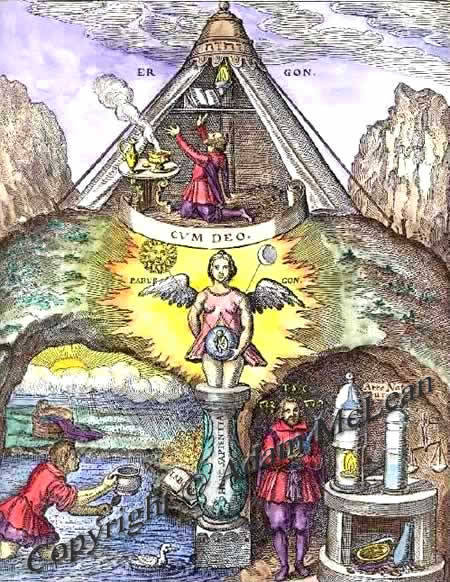
The Rosicrucians were a myth written into reality. They were an early example of what contemporary writer and magician Grant Morrison calls a “hyper-sigil.” A new social reality can be made by crafting a narrative that would attract certain people’s imaginations.
As John Dee was spending his last days at Mortlake amongst his looted library and estate, his ideas were finding a new outlet on the Continent of Europe. Beginning in 1607 CE, a series of pamphlets were circulated detailing the story of one Christian Rosenkreuz, who was said to have created a society for collecting and preserving the ancients’ esoteric wisdom revealing this information now. Rosenkreuz’s story would have him traveling to the East to learn the Ancient Wisdom traditions preserved there. He would bring these traditions back to Europe and would found his Brotherhood of the Rosy Cross to disseminate this wisdom.
Dee’s influence upon these documents can be seen in the Chymical Wedding of Christian Rosenkreutz. The invitation for the allegorical wedding of this manifesto is marked with Dee’s Monas Hieroglyphica. His influence had likely come from Heinrich Khunrath (1560 CE – 1605 CE), an admirer of Dee’s work and a writer on Alchemy. Another influence upon the emergence of the group had been Rudolf II (1552 CE– 1612 CE), the Holy Roman Emperor who ruled from Prague and had collected many of the best thinkers of the day from a wide variety of fields to his court and who has a firm devotion to the development of Alchemy.
On the Continent, Rosicrucianism was most closely associated with Germany and opposition to the Roman Catholic Church in alliance with Lutheranism. It would also come to cohabit with Speculative Freemasonry, a fraternal system derived partly from the Stone Masons of Medieval Europe. Because of the secrecy that such fraternal systems allowed, Freemasonry and groups modeled on Freemasonry would flourish, as would claims to Rosicrucian wisdom throughout the 17th Century.
At the beginning of the 18th Century, a lineage of particular importance began in Germany. With a claimed date of founding in 1710 CE (though it is suggested that 1750 CE was more likely), the Orden des Gold- und Rosenkreutz (Order of the Gold and Rosy Cross) was founded in Germany by Hermann Fichtuld. The group was open to Master Masons and focused its work on Alchemy. The group used a tired degree or grade system like most Masonic-inspired groups, with the format for this group being: Juniores, Theoreticus, Oracticus, Philosophus, Minor, Major, Adeptus, Magestus, and Magus. Here we see the reason for our detour over the last few posts. At the top of this structure, we find a Magus Degree taking its name from the Zoroastrian tradition.
Not much is available regarding the practical Work of the Orden des Gold- und Rosenkreutz. However, its structural titles would lay a foundation for other groups. The Societas Rosicruciana in Anglia (S.R.I.A.), a British Rosicrucian group founded in 1865 CE, would use it as the basis for their structure. Similarly open to Master Masons, its Degree system was spread across three “Orders”:
First Order
Grade I – Zelator
Grade II – Theoricus
Grade III – Practicus
Grade IV – Philosophus
Second Order
Grade V – Adeptus Minor
Grade VI – Adeptus Major
Grade VII – Adeptus Exemptus
Third Order
Grade VIII – Magister
Grade IX – Magus
Within the S.R.I.A. was Kenneth R. H. Mackenzie (1833 CE– 1886 CE). In his youth, he traveled to Vienna as a tutor. He may have been exposed to ideas from the Asiatic Brethren, a group of Frankish Kabbalists. A linguist and translator by profession, he would work in the office of Benjamin Disraeli when Disraeli was still a publisher. Mackenzie made a name for himself mainly through translations of and writing on the Classics. Still, he became interested in Rosicrucianism and the Occult in his spare time.
In 1854 he met Paschal Beverly Randolph (1825 CE – 1875 CE), an American who had founded the Fraternitas Rosae Crucis in 1858. In 1861 CE, Mackenzie traveled to France, where it is thought that he made contact with Eliphas Levi (Alphonse Louis Constant). When Robert Wentworth Little discovered some German rituals he believed to be of Rosicrucian origin, he recruited Mackenzie to help with the translation. This material would be used to found the S.R.I.A.
When Mackenzie died in 1886 CE, a manuscript was found among his papers in code. It would come into the possession of William Wynn Westcott (1848 CE– 1925 C.E.), a coroner and leading member of the S.R.I.A. Westcott would recruit Samuel Liddell Mathers (1854 CE – 1918 C.E.) o decipher the text. Mathers discovered that the text contained the outline for a magical Order based upon the symbolism of the Four Elements of Earth, Water, Fire, and Air with images drawn from the Kabbalah and Egyptian myth. Westcott and Mathers, along with Robert Wentworth Little, who was then Grand Magus of the S.R.I.A., would use this document to found the Hermetic Order of the Golden Dawn using a Degree System based on the S.R.I.A. in 1888 CE. As with the S.R.I.A., it would be spread across three Order:
First Order
Neophyte 0=0
Zelator 1=10
Theoricus 2=9
Practicus 3=8
Philosophus 4=7
Portal Grade
Second Order
Adeptus Minor 5=6
Adeptus Major 6=5
Adeptus Exemptus 7=4
Third Order
Magister Templi 8=3
Magus 9=2
Ipsissimus 10=1
Westcott and Mathers claimed that the Cipher manuscript originated within a German Rosicrucian group that had attempted, and failed, to create a Lodge in England some decades before. They contacted this group via a representative, Anna Sprengel, who does not appear to have gone through the formality of actually existing. As the manuscript appears to be in Mackenzie’s hand, it seems more likely that it was the plan for an unfulfilled Order of his design to be created within the S.R.I.A.
The First Order of the Hermetic Order of the Golden Dawn focused primarily upon a Kabbalistic approach to Magic for its lessons and Dramatic Rituals of the Freemasonic style for its Initiation Rites. Like much of the Rosicrucian Kabbalah, there seems to be a trace of Frankish, and therefore Sabbatean, elements to this, including the free pronunciation of the Tetragrammaton. In a radical departure from Freemasonry and the S.R.I.A., the Golden Dawn was open to female applicants and, as such, did not demand that its members be Masons.
The Second Order, for those who had completed the Kabbalistic Training of the First Order, focused instead largely upon practical magic and upon the Enochian Materials of John Dee, which Mathers had elaborated upon extensively from Dee’s original accounts. Into this mix, Mathers would fold the newly discovered wisdom of the Egyptians being translated thanks to the decipherment of the Rosetta Stone in 1822 CE and the practical Hermetic magic of Late Antiquity restored by the discovery of the Greek Magical Papyri in 1827 by Giovanni Anastasi (1780 CE –1860 CE).
No materials associated with the Third Order exist. It is widely believed that this Order was more theoretical, with little administrative function beyond potential Temple Roles in the Order’s Rituals. The titles for this Order, however, will prove to be important. The most novel addition to the Degrees by the Golden Dawn was the addition of “Ipsissimus.” This Latin word meaning “My Very-most Self” likely entered their design via Friedrick Nietzsche’s Human, All Too Human, published in 1878 CE.
The great streams of thought we have been discussing between these two Orders would come together. An authentic connection to the magical traditions of the Hermetica would be established. The Apocalypticism embodied in the Works of John Dee would be explored and expanded. The Messianic Kabbalah would be integrated as a foundation of the Order’s Work, a quirk enabled by a policy of Philosemiticism under Oliver Cromwell after the Civil War (If you are going to be the New Jerusalem, you are going to need Jews).
Although many people think of the Golden Dawn as a group of “old mustaches” due to its founders, its actual popularity was mainly with England’s literary and theatrical scene, with its early membership being mostly in their 20s. Early on, much of the operations of the group would pass from its founding triad to Mathers’ wife, Moina (Bergson) Mathers (865 CE – 1928 C.E.) and then to Florence Farr (1860 CE – 1917 C.E.) when the Mathers would move to Paris and appointed her Chief Adept in Anglia circa 1987 C.E.
Although not nearly as well known as other members of the Hermetic Order of the Golden Dawn, it is Florence Farr whose Work this series on Aeons truly pivots upon. She would provide a Key for a much more well-known Hermetic Order of the Golden Dawn member, who once saw himself as her suitor, Edward Alexander “Aleister” Crowley (1875 CE– 1947 C.E.).
Messianic Kabbalism
Sabbatai Zevi (1626 CE– 1676 CE) holds several distinctions. He was a Rabbi in a Sephardic community. He was a serious student of the works of Isaac Luria and the Kabbalah. He also engaged in conscious antinomianism of Jewish practice under the authority that he was the Messiah.
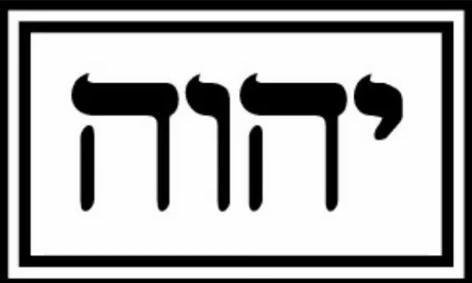
The details and specifics of what Sabbatai taught and practiced have been lost. He did take the bold step of speaking the Tetragrammaton, יהוה Yahweh, out loud in public at the age of 22. He staged various acts which today would be seen as publicity stunts, such as marriage ceremonies to the Torah or placing fish in cradles proclaiming that Israel would be redeemed under the Sign of Pisces. It is rumored that he engaged in licentious behavior and that the Sabbateans were practicing sexual rites in private based upon the sexual imagery of the Zohar.
It was during his travel to spread his teaching into the Ottoman Empire in 1666 that things took a turn. Sabbatai’s friend and the one who first recognized him as the Messiah, Nathan of Gaza (1643 CE –1680 CE), had shared a vision of Sabbatai going to Istanbul and having the crown of the Sultan placed upon his head. Upon arrival, Sabbatai was imprisoned. Eventually, he was given an ultimatum: prove you are the Messiah by being killed and returning or converting to Islam. On September 16, 1666, CE, Sabbatai appeared before the Sultan, having removed his Jewish garb, wearing a Turkish turban upon his head. He professed conversion to Islam.
Some of his followers denounced him for doing this, stating it proved that he was a false Messiah. Others felt there was an esoteric meaning to this conversion, so they publicly professed Islam while privately maintaining their Sabbatean Judaism, a group known as the Dönmeh. Within the broader Jewish community, Sabbatai’s actions were seen as a warning against mysticism generally and Kabbalah in particular. Some would take a highly conservative route, leading to Hassidism, while others would begin a process of Modernizing Judaism.
Sabbatai’s reputation, and parts of his teachings, were picked up a century later by another Jewish figure, Jacob Frank (1726 CE – 1791 CE) of Poland. Frank embraced the notion of “purification through transgression” and claimed to be a reincarnation of Sabbatai Zevi and the patriarch Jacob. In time he proclaimed himself a deity, was excommunicated from the Jewish community, and began converting with his followers to Roman Catholicism. This last step was seen with suspicion as attempting to recreate Sabbatai’s conversion to Islam. However, some 26,000 “apostate” Jews were converted as a result.
Frank would find a place for a time in the Court of Vienna, where he was seen as bringing the Word of Christ to the Jews. He eventually moved to Offenbach, claiming the title of “Baron of Offenbach.” With their conversion, the Frankists would bring their particular line of Sabbataen Kabbalah, which retained Apocalyptic and Messianic elements, into the Polish Christian world. It would disseminate with various alterations through Continental Freemasonry and Rosicrucianism.
It would be this line of Messianic Kabbalah that would be brought together with the Elizabethan Apocalypticism of John Dee within the most critical magical order of the 19th Century: The Hermetic Order of the Golden Dawn.
Sunday Bonus
Saturday Quote

“In Political Science the term ‘ideology’ has an undesirable connotation, since it generally refers to structured systems of belief and behavior that are imposed upon a target group, and not supported by reason or philosophy. See a detailed definition here. Ideologies are usually identified by the ‘-ism’ suffix, as in capitalism, communism, fascism, socialism, etc. Philosophers regard ideologies pretty much the way Gandalf did the Balrog.
‘Satanism’ got that name originally because it too was ideological, i.e. the simple negation of Judæo-Christianity (also an ideology). During 1966-1975 what was happening in the Church of Satan was that it was gradually becoming less ideological, more philosophical. The Temple of Set has always sought to be 100% philosophical, 0% ideological, though we have seen that human thought occasionally wants to be lazy and relax back into ideological alpha-brainwaves.
That’s why I hate, loathe, despise, in fact don’t like the term ‘Setianism’. At Conclaves you can frequently see me harassing Setians into taking the extra breath to say [and do!] ‘Setian philosophy’.”
Dr. Michael A. Aquino, January 31st, 2008
Friday Viewing
Apocalypse and John Dee

Within the early phases of the Protestant Reformation and the first formalizing stirrings of the Witch Craze would emerge, the most important of the Righteous Scholar Magicians for the English-speaking world, Dr. John Dee (1527–1608).
Dee would integrate a profound understanding of Mathematics, Astronomy, and Astrology with the magical methods developed from the distribution of the Hermetica as well as other texts drawn from the Islamic World (or claimed to come from the Islamic World and before) that would make up the Grimoiric tradition of Angelic and Demonic Magic.* He would serve on the Court of Elizabeth I of England, travel throughout Europe, and would make contact with such vital figures of Modernity as Rudolph II of Bohemia, Astronomer Tycho Brahe, and at least met with the father of Modern Empirical Science Francis Bacon.
Dee’s contribution has been much discussed of late, so I will not reiterate it here. What is significant, however, is that his reception of the Enochian Angelic Magic with the help of Edward Kelly can only be understood within the context it was received: a radical Apocalypticism that saw England as the place for the Final Kingdom of the Millennium. The Enochian materials speak directly of being means by which the End Times would be catalyzed.
With the coming End at hand, finally were living men capable of receiving the wisdom God had given to the First Men, whereby they would know the Mind of God as they entered the New World on the other side of the Apocalypse. This notion of the Apocalypse revealing the Mind of God underpins not only Dee’s Work but nearly all of the works of the great thinkers of Modernity. The development of the Sciences, Empiricism, and the new mathematics, Calculus, which would allow for developments in Physics, were part of a pre-Millennial dispensation.
Among Dee’s visions was placing England as the Final Kingdom by creating a grand empire that would span the world. He would create unfulfilled plans for the colonization of Narraganset Bay in what is now Rhode Island and developed navigation methods that would lead the British Navy to become the most powerful in the world. These notions were greeted warmly by Elizabeth I, however, her successor James I, was uninterested.
James I cared little for the supernatural and marginalized those who did. Dee, who had found patronage under Elizabeth I, would find none with James I. He would live out the end of his life at his dwindling estate of Mortlake. His close association with occultism and mathematics would affect the wave of intellectuals after him. It may have been the reason for the depreciation of mathematics in the work of Francis Bacon. James I would pick up the significance of building an Empire in the New World. Still, he chose the area that is now the American South rather than Dee’s northern suggestions.
James I’s son Charles I would seek to unify England, Scotland, and Ireland under a unified rule, as had been his father’s dream. His actions would lead to contention in parliament and the English Civil War. Unshockingly, issues related to religion and to Apocalypse would play into this conflict, from the issue of the Divine Right of Kings to the role of the Puritans and other even more radical Christian Sects like the Levelers and Diggers. The aftermath of the Civil War would inspire perhaps one of the most enduring Modern myths of Satan in Milton’s Paradise Lost.
Interestingly it would be a father and son, both Classicists, who would undo the Righteous Scholar Magician’s role in the West. Isaac Casaubon (1559 EV –1614 EV) was among the most learned men of his time and focused firmly on philology, the comparative study of texts. He was well known for translating Aristotle, Pliny, and others. Of importance to our story, Isaac Casaubon turned his attention to the Hermetica and made a remarkable discovery. Rather than the primordial, pre-Moseic origin of this material widely accepted for Theological reasons, the books of the Hermetica betrayed linguistic attributes suggesting that they were of origin by his estimation in the 1st Century EV. This would undermine the notion that what the Scholar Magicians were doing was righteous and shook their claims of spiritual authority.
Isaac’s son Meric Casaubon (1599 EV – 1671 EV) had held the favor of James I. He fell strongly out of favor during the Civil War and by its victor, Oliver Cromwell. Casaubon was a strong critic of supernaturalism, and in 1657 EV published an account of Dee’s contact with Spirits and the origins of the Enochian system. Casaubon regarded these interactions as Satanic in origin and called upon those of his time to repudiate Dee’s Work entirely.
The Magicians were now cast down into the same terrain as the Witches, mere Heretics to be disregarded. Into the void, this created in the culture would move the Scientists, many of whom would forget their own “demonic” origins in successive generations. Neither group would vanish completely, but they would have to take refuge in the fringes of culture, no longer holding patronages of Crowns and places of prestige in universities. Magic would continue, but it would do so behind closed doors. Behind those closed doors, it would run into another tradition long marginalized, European Jewry.
*Owen Davies’ Grimoires: A History of Magic Books is the best scholarly starter source on this subject presently available.
On the Prince of Darkness: English Sources

The phrase “Prince of Darkness” in English was first attested to in the 17th Century. It appears in A Declaration of Egregious Popish Impostures (1604 CE) by the Archbishop of Yorke, Samuel Harsnett (1561 – 1631 CE). Harsnett, as an Anglican, was firmly against the exorcism practices conducted by the Roman Catholics.
“Darkness” derives from the Old English “deorcnysse.” The Old English “deorc” means “dark, obscure, gloomy; sad, cheerless; sinister, wicked,” and likely derived from the Proto-Germanc “*derkaz.” This same root would provide the Old High German word “tarchanjan” meaning “to hide, conceal.”
[Note: For those Runsters reading this, the Proto-Germanic equivalent to “Prince of Darkness” would be “*Druhtinaz ab *Derkaz” or “Drighten of Darkness.”]
Yorke’s book would influence two of the most significant English language writers: William Shakespeare (1564 – 1616 CE) and John Milton (1608 – 1674 CE).
Shakespeare used the phrase “Prince of Darkness” along with other figures drawn from Harsnett’s book in his tragedy King Lear. Based on the legendary figure of Leir of Britain, the play recounts the story of King Lear’s distribution of his responsibilities to his daughters based upon nothing but flattery. The character of Edgar, who takes on the disguise of the insane vagrant Tom O’Bedlem, recites the line:
Act III, Scene IV, l. 140:
Edgar: The prince of darkness is a gentleman: Modo he’s call’d, and Mahu
The names of Modo and Mahu were both drawn from Harsnett.
Milton’s Paradise Lost deals with the term more extensively and would frame the popular mythology of the figure of Satan as the Prince of Darkness through the subsequent centuries. What tends to get lost to contemporary readers is how deeply indebted the work is to Milton’s experience in the English Revolution and Restoration. At stake in this conflict were two key issues, that of Protestantism and Catholicism, and separately, the role of the King ruling as a Divine Authority and the desire for a Parliamentary system.
Tied into this conflict were the Apocalyptic themes resonant in England, which had been strongly influenced by Dr. John Dee (1527 to 1609 CE). Milton’s poem about the attempted toppling of God by a usurping Lucifer, his transformation into Satan, and his role as the Serpent of the Garden of Eden would reflect multiple feelings regarding the successes and failures of the Revolution and were rooted in Milton’s conflicts regarding what had happened.
 Setemheb