The Magus in the Age of Satan

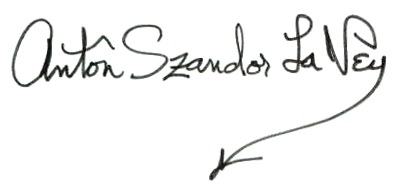
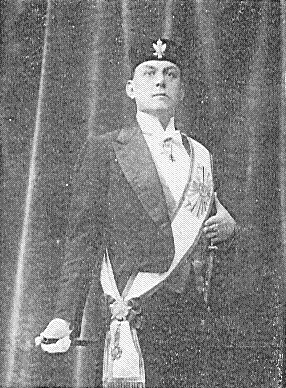
Although certainly, some may have thought themselves Magi, none were regarded as such by other magicians of the Aeon of Horus. No one had come forth within the Western Esoteric Tradition. No one had come forth in the Easter Esoteric Traditions. The only one who did come forth and was arguably Recognized by the World for a time was one who had come “from no expected house”: Anton Szandor LaVey (1930 CE – 1997 CE).

Anton Szandor LaVey began life as the more prosaic Howard Stanton Levey. The tale of Howard Stanton Levey and his transformation into Anton Szandor LaVey, Magus of the Age of Satan, has been well documented elsewhere. For those interested, the heavily documented Church of Satan by Dr. Michael A. Aquino is excellent. It makes a good contrast to the more personal account of LaVey provided in Burton Wolfe’s The Black Pope. This piece will focus on LaVey’s contributions to the notion of the Magus.

LaVey was not a trained scholar nor a close student of any field. He was an autodidact in several fields and a talented amateur visual and musical artist. What he excelled in intellectually was getting a sense of the undercurrents in human behavior. This was aided by his being perfectly comfortable accepting humanity as it was rather than as some ideology would prefer it to be.

This capacity gave him a rather dismal view of much of what passed for “occult wisdom,” with perhaps his best critique being summed up in the introduction to The Satanic Rituals:

Many magical curricula are padded beyond belief with pseudo-esoteric data, the purpose of which is:

(a) to make it tougher to learn since no one places any credence in what comes too easy (though they constantly seek shortcuts, giveaways, and miracles);

(b) to provide many things that can go wrong so that if a ritual doesn’t work, it can be said that the student was delinquent in his studies;

(c) to discourage all but the most idle, bored, talentless, and barren (translation=introspective, mystical, spiritual) persons. Contrary to popular assumption, esoteric doctrines do not discourage non-achievers but actually encourage them to dwell in loftier ivory towers.

Those with the greatest degree of natural magical ability are often far too busy with other activities to learn the “finer” points of the Sephiroth, Tarot, I Ching, etc.

 This is not intended to suggest that there is no value in arcane wisdom. But, just because one memorizes every name in a telephone directory, it does not mean he is intimately acquainted with each person listed.

A young LaVey gravitated towards the figure of Satan and the notion that He should have a Church of his own. This had been the one ingredient wholly lacking in the Golden Dawn’s integration of the magical ideas of the Early Modern Period and only shallowly touched upon by Aleister Crowley. For LaVey, the Prince of Darkness, its Witches and Warlocks, its profane rites, and Blasphemous proclamations would become the center of gravity of his synthesis.

LaVey had seen that the world had changed. The end of the 19th Century was the end of the Modern Period. The past superstitions were irrelevant to the human animal. Man’s religions were lies for the sake of individual psychological coping or mass social control. What those social forces had hated and repressed as the domain of Satan, humanity’s animal and carnal desires, as well as his higher capacities for reason and artistic expression unbound by “decency,” were not the Enemies of humanity’s fulfillment but the very road to it. Rather than cast out Satan, why not valorize this shunned emblem of all we were and ever could be?

LaVey’s ground-level acceptance of humans as they were rather than as anyone would wish them to be would coalesce into what has been Recognized as his Word: Indulgence. This would be the central principle behind his ideas and Teachings, the Word of the Age of Satan, and the first significant innovation in the Occult world since Crowley. It also came as a part of a seismic shifting of social values that propelled LaVey towards international celebrity and, for a short time, serious regard.

Related to the notion of Magus, LaVey took a fairly pragmatic approach. He did not care about Aeons or significant contributions to the realm of philosophy. He described the Magus V° of his Church of Satan in his February 15, 1970, National Insider column “Letters to the Devil” in the following manner:

“All Satanic Masters [IV°] are automatically encouraged to work towards the position of Magus, but encouragement by this stage of the game is hardly necessary, as without the inventiveness and innovation potential which is required for the Magus, they would never have become Satanic Master in the First Place.

My position as Magus is predicated upon my bringing of Satanism to the light of day in an acceptable form for the first time in history.”

In November 1970, he would, under the pseudonym “John M. Kincaid” for the Church of Satan membership newsletter Cloven Hoof expand upon this:

The Title of Magus V° is conferred upon members of the IV° who have discovered and brought forth a new magical principle and utilized it in a manner that profoundly affects the activities of the world. The position held by Anton LaVey as High Priest is monarchical in nature, papal in degree, and absolute in power. His exalted position is the result of doing what no other man has done in the span of a millennium: bringing Satanism into the world as an organized, legitimate, aboveground persuasion – and with it restoring the dignity of man’s own godhead. 

LaVey would never Recognize another Magus within the Age of Satan and the Church of Satan. He did not do so from 1966 to 1975 CE period of his most active public Work. He did not do so after 1975 CE until his death in 1997 CE, when he mentored a cadre of fringe artists and entrepreneurs. LaVey alone would be the one Magus of the Age of Satan.

His Teachings and his example, positive and negative, did prepare one other for the Task of Magus: Michael A. Aquino. It would be this man, with the ren of Ra-En-Set, who would clarify the doctrine of Aeons and create a system that allowed for but did not demand the capacity of other Magi to come into being. And he would do it with his Utterance of Xeper, the Eternal Word of the Aeon of Set.

Grady McMurtry on the Temple of Set

While flipping through the first volume of “The Magickal Link” I came across the following in Vol. I, No 5 May 1981 in the column “Grand Lodge Report”: 

A few weeks ago, the Grand Lodge met with the three principal officers of the TEMPLE OF SET. this body has no relationship to Grant’s work or his organization but is a development from S. LaVey’s Church of Satan. The Temple of Set no longer has a relationship with the Church of Satan, either informal or doctrinal senses. The meeting was informational and brought out a number of details that our membership might like to know. The Temple of Set contends that a new Aeon of Set has replaced the Aeon of Horus. This organization possesses incorporation, a detailed and developing study of Liber AL, several holy books of its own and an excellent study course syllibus[sic]. Its membership is nationwide and quite diverse. The three individuals we met were quite polite and entirely civilized. Although it is impossible for any central organization to be entirely responsible for distant members, we believe that the various rumors and stories about negative aspects of this organization are either unfounded or are based on private conduct of unknown individuals not acting on behalf of the organization. thus, although there are very definite differences in doctrine, tradition, and methods of operation between O.T.O. and T’.’S’.’, we are happy to have met these people, and we hope that friendly relations will result. Any future issues of the ML will carry a contact address for this Organization – more later. 

Thelemic History Reading

The history of Thelema as a social movement can best to understood comprehensively through the following list of resources

https://blog.thelema.dev/thelemic-history-reading-guide/

Alan Willm’s blog is an excellent resource for those seeking to understand the A.’.A.’. system and the people who continue to work it. His history guide provides insights from first person accounts from practitioners, non-practitioner scholarship, and multi-perspective approaches to get as fully formed an understanding as possible.

Other Magi of the Aeon of Horus

By the design of the A.’.A.’. a Recognition was supposed to coincide with the Recognition of another into the Degree you were vacating. Before you could become a Zelator, you were supposed to find someone to take your place as a Neophyte. This design would ensure that a superior could teach something to an inferior in the Order and ensure the continued expansion of the Order’s membership.

When Crowley Recognized himself as a Magus, he knew he would need someone to replace him as Magister Templi. Charles Stansfeld Jones would be recognized as a Magister Templi based upon his taking the preliminary “Oath of the Abyss” in 1916. Jones’s claim to being a Magister Templi had come not from doing the regular Work of the A.’.A.’. but from essentially leapfrogging over the Grades via the Oath.

Crowley took the Oath of the Ipsissimus in 1923 C.E. with no co-Recognition as Magus below himself to take his place. In fact, during Crowley’s lifetime, he never recognized another Magus within the Aeon of Horus*. When he died in 1947 C.E., he had not made legal provisions for the A.’.A.’ survival beyond his life, though he had with the O.T.O.

This did not prevent others from claiming to be a Magus or Uttering a Word via the A.’.A.’., nor for others to cast their preferred Thelemic Teacher in this role. 

C. S. Jones made claims of instituting an “Aeon of Justice and Truth,” which superseded the Aeon of Horus but was not quite the Aeon of Ma’at that Crowley had claimed would supersede that of Horus. Jones never proclaimed a Word for himself, nor from his letters as republished in the introduction to Liber Aleph, did he feel he was the Magus of this Aeon. Others, however, have cast him into that role since his death in 1950 C.E. Of particular value for Jones’ exploration of these ideas is the collection of letters published under the title The Incoming of the Aeon of Maat.

Following Crowley’s death, the state of organized Thelema largely fell to nothing. In his excellent, The Unknown God, Martin P. Starr provides an account of Crowley’s O.T.O. heir, Karl Germer’s attempt to hold together the existing Thelemites with little effect. As a result of no centralized Thelemic authority, it was easy for quasi-Thelemic groups to form.

One of these quasi-O.T.O. groups was known as “The Solar Lodge.” Created by Ray Burlingame, a one-time O.T.O. IX°, and his student Georgina “Jean” Brayton, the group worked an idiosyncratic combination of the O.T.O. and A.’.A.’. systems beginning in 1965. They operated a ranch compound that would become subject to law enforcement scrutiny and tremendous bad press. An insider account of their activities can be found in Inside Solar Lodge – Outside the Law, written under the pseudonym “Frater Shiva.”

The bad press around the Solar Lodge, and thus Aleister Crowley and Thelema, lead a one-time IX° of the O.T.O., Grady Louis McMurtry (1918 C.E. – 1985 C.E.), to decide to do something about the lack of central authority in Thelema. A veteran of WW2, where he had helped in the execution of the Normandy Invasion and of the Korean War, McMurtry had spent time with Crowley while in England and would return to the United States a IX° O.T.O. Crowley would also provide him with authority to take charge of the O.T.O. operations in California, and potentially to succeed Germer if need be, pending Germer’s confirmation. Crowley would pun upon California by calling those who would lead after him, Caliphs.

Using the authority of the so-called Caliphate Letters from Crowley, McMurtry would re-establish the O.T.O. in 1969 C.E. McMurtry began seeking out those others who had been IX° to ask them to either help or get out of the way in his attempt to revive the O.T.O. and defend Crowley’s legacy. This would lead to no minor turbulence, particularly with other claimants to the title of being the one true head of O.T.O.

In 1977 C.E., he wrote a Charter for Thelema Lodge of San Francisco as the Grand Lodge of the O.T.O. In signing this Charter, he pronounced this under his authority as “Frater Hymeneaus Alpha 777, IX° O.T.O., 9=2, Caliph of the Ordo Templi Orientis.” The charter can be seen here. Of note is the claim of 9=2, the designation in the A.’.A.’. for the Degree of Magus. To the best of anyone’s records, McMurtry was not a member of the A.’.A.’. while Crowley was alive. Also, McMurtry never publicly proclaimed himself as a Magus other than this one time, nor did he ever state his Utterance publicly. He was never Recognized as a Magus 9=2 by any of the Students of Crowley in the A.’.A.’. at or after this point in time.

McMurtry’s A.’.A.’. experiences and those of his students were largely unrecognized for decades. This has changed dramatically in the past decade due to the work of one of McMurtry’s A.’.A.’. students, Jerry Cornelius. If you are interested in McMurtry’s life and magical legacy, Cornelius’ two-volume biography, In the Name of the Beast, is essential reading. For those interested in a more condensed account of McMurtry’s Magus claim, this essay will be valuable

https://www.parareligion.ch/rf/rf2.htm

*There is a rumor that Crowley regarded Jones as a Magus 9=2 of A.’.A.’. and recorded him by this Grade on a copy of the Order of Thelemites Constitution. However, at this point, those rumors have not been substantiated.

To Mega Therion and the Aeon

1909, based upon the Enochian visions described in The Vision and the Voice, Crowley would claim the Grade of Magister Templi within his A.’.A.’. The comment published with The Vision and the Voice in 1911 CE outlines the doctrine of Aeons drawn from the repeated use of the term “Aeon” in his visions and their association with Horus as “Crowned and Conquering Child.” However, “Aeon of Horus” is explicitly never mentioned in the visions.

These visions discuss the Being-condition known as Magister Templi and the other two Degrees of the Third Order, Magus, and Ipsissimus. In particular, the Magus is discussed as necessary for bringing a “New Aeon” into the Vision of the 27th Aeyther, with more details about the Magus in visions of the 6th and 4th Aeythers.

Starting in 1910 CE, Crowley began pushing himself to fully understand the Magus Degree. This process would lead to new contacts in the realm of esoteric orders. It would hold a significant relocation to New York as well.

In 1912 CE, he published The Book of Lies, which triggered Theodore Reuss, head of the quasi-Masonic Ordo Templi Orientis, to contact him, claiming he had revealed the Secrets of that Order’s upper Degrees. Crowley claimed that wasn’t possible as he was not privy to those Degrees, but intuited once Reuss came to him that it was of a sexual nature and triggered by “Psalm 36 – The Star Sapphire.” This was Crowley’s version of the Golden Dawn Hexagram Ritual re-written for the A.’.A.’. It is interesting for my purposes as the central moment of this rite includes the appearance of the Egyptian neter Set, one of the few times Set is explicitly mentioned in Crowley’s rituals, as the sign of the individual linking with their unique Divine Pattern.

Now aware of the Secret of Reuss’ OTO, Crowley would be sworn to its IX°, taking the name Baphomet, the devil figure of the Templar accusations as reimagined by Eliphas Levi. He learned that Reuss had adapted the method from the Paschal Beverly Randolph influenced Hermetic Brotherhood of Light for the rudimentary sex magical practices of his OTO. To these, Crowley would add his fertile sexual imagination, creating a battery of sexual techniques as attested in his technical writings for the OTO and his diaries of his New York period. The particulars of Crowley’s technical writing on sex magic from the 1912 CE to 1914 CE period hold a few interesting implications for Setians; however, their confidential nature will not be explored in this present series.

In 1909 CE, Charles Stansfeld Jones (1886 CE–1950 CE) joined the A.’.A.’. after reading an issue of The Equinox. With Crowley’s association with the O.T.O., Jones joined this Order and would also become the head of the Order’s North American activities operating in British Columbia, Canada. Jones would spend a lot of time working on the ciphers in the Book of the Law as a part of his A.’.A.’. He worked first under J.C.F. Fuller and then Crowley himself.

In 1914 CE, Crowley relocated to New York to avoid the First World War and pursue writing, painting, and his Task as a Magister Templi. This would become a period of intense magical Work, leading him to his attainment as Magus, whose Word was θέλημα [Thelema], and whose name was To Mega Therion, “The Great Beast, whose number was 666. As foretold in The Vision and the Voice, he would proclaim a New Aeon to humanity as Magus. By the rules of the A.’.A.’. he would need to find a replacement for himself as a Magister Templi and did so by Recognizing C. S. Jones as such on October 12, 1915, at the same time as his Recognition as Magus.

 The period of correspondence afterward between Crowley and Jones, collected as Liber Aleph, shows the formation and formalization of Crowley’s Doctrine not only of the Aeons but also of the Magus in the A.’.A.’. and historically. He identifies seven previous Magi: Lao Tzu, Thoth, Krishna, Gautama, Moses, Dionysus, and Mohammed. History, not being Crowley’s strong suit, does not address these chronologically but rather as a means for outlining what he saw as the essential contributions of these figures to his understanding of his new Aeon as a magico-poetic process. Each would be identified with a Word that summed up their entire philosophy much as θέλημα summed up his own.

After his Magus experience, the Book of the Law would be recast as the sign of the beginning of the New Aeon, which had taken Crowley some 11 years to develop sufficiently to act as its Magus. The period of private exchange with Jones and other Initiates of the A.’.A.’. and OTO would lead to a renewed sense of purpose, culminating in the publication of The Equinox Vol III No. 1 in the Spring of 1919 CE. The complete system of the A.’.A.’., which contained detailed information on the Magus Degree, was provided in “One Star in Sight,” published as a part of Crowley’s Magick In Theory and Practice, published in 1929 CE. He would suggest in this text that a Magus could either Utter a Word that would instigate a New Aeon or perform an Utterance that would enhance the existing Aeon in some fashion.

Thus, in Crowley, we find all of the various lines of thought discussed in this series brought together. Through the Name of the Beast taken from Revelation, with an understanding crafted from Messianic Kabbalah and honed by the Enochian system, with the Gnostic doctrine of Aeons and the magico-philosophic traditions of Logos, sutured together under the Zoroastrian title a Remanifesations of all of these streams and the articulation of a new Being State was Recognized as attainable while alive: the Magus.

The Beast and the Book

Aleister Crowley’s family had been members of the Plymouth Brethren, a community of worshipers whose Christian doctrine derived from the world of John Nelson Darby (1800 CE– 1882 CE). Like many 19th Century Christians, notably the American Baptist William Miller (1782 CE – 1849 CE), Darby felt that the time of Great Revelation was at hand. Unlike Miller, who had calculated the End of Days only to find himself and his followers still living, Darby created several End Times doctrines situating himself and his followers just before the End, a pre-Millennial period.

Darby’s most significant contribution to Christian thought, and to the thought of Aleister Crowley, was a doctrine of Dispensationalism. Echoing Joachim de Fiore, Darby proposed that the Divine interacted with the faithful through a series of Progressive Revelations. There had been a Revelation for the Israelites, a Revelation for the Christian Church, and there was now a new Revelation at hand in the time before the Millennium. As the faithful developed, so too did God develop his Revelations, allowing for a new and more perfect understanding of his Scriptures.

Darby’s other significant contribution, which has endured throughout American Protestantism, is the concept of the Rapture.

The Plymouth Brethren that Crowley had been born to felt that they were God’s special chosen in this time before the End of Time. By practicing a rigid but primitive form of Christianity, they prepared themselves as God’s Chosen for this final Dispensation. As such, talk of the Apocalypse was every day in Crowley’s childhood. He claimed that his mother would liken him to the First Beast of Revelation in Chapter 13 of that book, the “Beast from the Sea.”

In 1904 CE, Crowley and his new wife Rose were in Egypt. On their initial honeymoon, the two would spend a night in the Great Pyramid where Crowley, in a moment of playfulness, would use the Golden Dawn “Bornless Rite” as part of a Horus-themed Working to entertain her. Based on the PGM “Stele of Jeu,” this rite is a Gnostic Rite of Ascension meant to transform the magician into a Divine Figure who could engage in magic. In April of that same year, they were again in Egypt when Rose would enter into trance states, telling Crowley, “They are waiting for you.”

Crowley dismissed these episodes at first and then began pressing her in the hopes of proving this all to be silliness. To his surprise, she identified the Egyptian God Horus as being the one who was waiting, and Crowley claimed she described the figure to match the Golden Dawn’s ideas of Horus’ associations. He would take her to the Cairo Museum to point out who the message was from. She identified the seated divine figure on the Stele of Ankh-ef-en-Khonsu I, a representation of Ra-Horakhty, “Ra-Horus of the Two Horizons.” What struck Crowley all the more was the Museum number for this piece: 666, the Number of the Beast from the Sea in Revelation.

He decided to pay attention. Rose told him to go into a room for one hour over the course of the three days and to write down whatever he heard. The result was the Book of the Law.

Providing a complete account of the reception of the Book of the Law is outside the scope of this series. Crowley’s account of it can be found in The Equinox of the Gods and in the compilation of his commentaries on the text published as The Law is for All. A text transcript can be read here, while photographs of the original manuscript can be seen here.

What is interesting about the Book of the Law for this discussion is not so much what is in it but what is “missing” from it. Nowhere within the text is there any discussion of the notion of Aeons, nor is any “Aeon of Horus” ever mentioned. Even in the 1912 published Commentary on the Book of the Law by Crowley, no mention of an “Aeon of Horus” or “Aeons” appears. In the span of publication of The Equinox Volume I, from 1909 to 1913, there is only one use of The phrase “Aeon of Horus” in the commentary on The Vision and the Voice in Vol 1 no. 5, dated 1911. The word “Aeon” does appear in some of the poetry published during this time, over as a sense of time duration or in the sense of “eternity,” with possible Farr-derived Gnostic implication. There is also a mention of Ra Hoor Khuit, Crowley’s variant on Ra-Horakhty, as “Lord of the Aeon” in the account of the “Evocation of Bartzabel” in issue volume 1 no. 9.

The doctrine of the Aeon of Horus as “The New Aeon” would not appear in Crowley’s published works until 1919 CE, with the publication of Vol. III no. 1, aka “The Blue Equinox.” Previously, the notion only appeared in the letters that would eventually be published as Liber Aleph. Written in 1918, if the edited and printed versions are to be believed, the notion of Aeons appears to have coalesced in Crowley’s thinking by this time. It appears in the discussion of the Magus as “Logos Aionos,” starting around letter 68. Crowley explicitly states the notion of the Aeon of Horus as being ruled by Horus the Younger in letter 85.

In its fully wrought form, Crowley’s Doctrine of the Aeons has a remarkably Darbyite quality to it. Humanity had gone through a progressive series of dispensational revelations. The first of these known Crowley identified as “The Aeon of Isis,” ruled by mother-goddesses and humans as infantile adorers. The next dispensation, “The Aeon of Osiris,” was ruled by Dying Gods and “Salvation by Proxy” models. Now we were witnessing a new dispensation, with Crowley as its Prophet, which Crowley identified as “The Aeon of Horus (the Younger).”