Recovering the Hermetica

Byzantine emperor Alexios I faced a seemingly insurmountable challenge in the 11th Century. Despite being the heir to the Roman Empire, Alexios I saw his area of rule diminishing with the expansion of the Seljuq dynasty.

The House of Seljuq was a Turkish family who practiced a Sunni variation of Islam that, in time, integrated features of Persian culture. With the unifying force of Islam, they had managed to expand their empire far and wide through the Middle East and into Central Asia. By the 11th Century, however, the Seljuq empire was fraught with internal conflict as local rulers attempted to consolidate their powers rather than form an integrated empire.

Alexios I did not have the manpower needed to fight off the Seljuq, so he made an appeal across the Schism to Urban II, the Pope in Rome. He wanted access to the armies of Western Europe under his command. What he got instead was the First Crusade.

The First Crusade was successful in fighting back the Seljuq in the Middle East and overtaking what Christianity was as “The Holy Land.” This return of the True Church to the Holy Land had opened the doorway for ideas like Joachim’s and other readings of Revelation suggesting that the End was at hand. New economic methods were developed to equip Crusaders, keep track of goods and supplies, and return found wealth to the ruling centers in Europe, which would, in time, yield the first transnational banking systems. It also brought Western European nations into significant contact with the Islamic World for the first time and, with it, restored access to texts from the Classical World, which had been thought wholly lost.

The changing vision of the meaning of the present, the shifting economic systems, and the return of “Lost Wisdom” fermented together, forming what has become known as the Renaissance. For Renaissance thinkers, the Classical World held all wisdom. The older, the better. While works of the Greeks, such as Aristotle and Plato, were seen as significant, the real prize, based upon Lactantius’ ideas on Hermes Trismegistus, was the Hermetica.

In the 15th Century, Marsilio Ficino was employed by Cosimo de Medici towards the re-founding of Plato’s Academy in Florence, Italy. He was engaged with the translation of Plato’s Dialogs towards this end when Leonardo da Pistoia discovered an early-era cache of Hellenistic documents. Cosimo purchased the materials from da Pistoia and insisted that Ficino cease working on Plato. He now had something more important to translate: the Hermetica.

Ficino’s translation of the Hermetica set off an intellectual firestorm in Europe. The most Ancient of Ancient wisdom had been restored just in time for the Apocalypse. And should it not be so? Should not the future Final Kingdom to Reign in the Name of the Lord have restored to it the most primordial revelations of that Lord? And should not the technologies contained therein, these practices known as magic, act as means for fulfilling the prophecies of the End Times?

Ficino himself would contribute a vital idea to this matrix, the “Prisca Theologia.” Ficino, drawing upon Lactantius, would suggest that going back to primordial times, a single true theology was being revealed through history. Beginning with Hermes Trismegistus and weaving through Zoroaster and the Chaldeans, the Greeks such as Pythagoras to Plato, into the Neo-Platonic thinkers and eventually into the Church of Rome, the one true theology was becoming manifest in the World. This idea would influence Giordano Bruno, Tommaso Campanella, and Giovanni Pico della Mirandola, eventually laying the seeds for Rosicrucianism.

As there was an awareness that the Ancient Wisdom might contain untruth, those engaged in these practices were monitored by Church authorities but were not banned outright. Cryptography systems were developed to ensure that information could be passed freely. Johannes Trithemius’ Steganographia was the most critical work in this tradition.


Much of the Hermetica was focused upon the practices of Astrology and led to a great revival of this practice in Europe. In addition, texts on Alchemy from the Classical and Islamic Worlds were being translated and integrated into this intellectual milieu. Rather than being seen as heresy, initially, these practices were seen in the light of the importance of Hermes Trismegistus and, as such, were not seen to be a source of theological conflict. Indeed an entire class of “Righteous Scholar Magicians” was forming who brought together an interest in ancient languages, the Hermetica, and skilled observation of materiality and the stars.

As the 15th Century gave way to the 16th massive social and political upheaval would transform the Western Word. Working at the hub of these changes was the most significant representative of this neo-tradition of Righteous Scholar Magician: John Dee.

Aeon and the Apocalypse

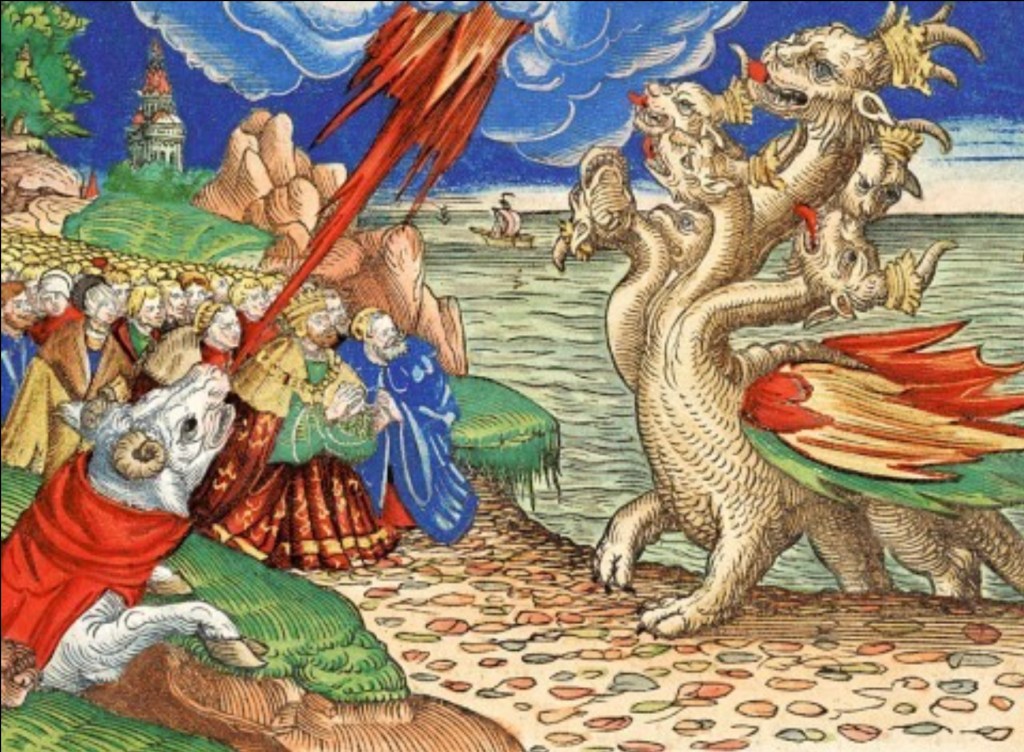
The Revelation of John stands out as perhaps the oddest document in the compilation of texts known as the Bible. If you have read that compilation, you realize how odd it is to stand out in that crowd. Of the books of the New Testament, its inclusion was the most controversial, and it was not included in the Eastern Church’s Canon. Elaine Pagels’ Revelations: Visions, Prophecy and Politics in the Book of Revelation is excellent for those interested in an in-depth analysis and history of the text.

Within the highly stable worldview of the Middle Ages, Revelations sat as the one means of radical change. With the arrival of the Final Kingdom, the old social orderings would be disbanded in favor of a new one with greater equality for the righteous. For most of this period, it was a tiny spark of hope, and that spark would take until the 12th century to cause a fire.

Joachim de Fiore (1135-1202 CE) was the first to catch fire. A member of the Order of Cistercians, Joachim was obsessed with piety, pilgrimage, and the Book of Revelation. He came to a doctrine that would rock the Medieval World through studying the text and his own mystic visions. The World for Joachim was seen not as a static thing but rather something which was developing, processing, in a relationship with the Divine. The Old Testament of the Hebrews marked the original development of humanity to the Divine, as one group alone had come into contact. This was the Age of the Father and was marked by the Patriarchal power of the Father and the story of his Chosen. Beginning with the birth of Christ, a new relationship was developed between humanity and the Divine. No longer was the message for the Chosen alone but rather for all those others. The Patriarchal rule of the Father gave way to the growth of the Church as representative of this new Age of the Son. Joachim realized that, like the Trinity of his God, there must be a third Age, the Age of the Holy Spirit, where the apparatus of the Church was dissolved as individuals came into direct contact with the Divine.

Joachim’s realization opened Pandora’s Box at the end of the New Testament. If the relationship between humanity and the Divine was not a finished project as had been thought but rather something still developing, then change was not only possible, it was the only way to bring about this Age. Various visions of what this would mean began to ferment around Western Europe, vying for attention and being subject to charges of heresy. Might women become the new rulers of this coming Age of the Spirit? Might the Antichrist attendant to the Revelation already be upon the Earth, or worse in the Church in Rome itself? Might the expansion of the Divine from the Chosen to the Gentile suggest that in this new Age to come, those far beyond Western Europe would need to be brought the Divine Message?

You can guess how well this message of the dissolution of the Church went over in Rome. Indeed Joachim’s ideas became the target of the essential Catholic thinker of this period, Thomas Aquinas, who made special efforts to undermine their influence in Summa Theologica. But it was too late; the idea was loose in the culture that not only was change possible, but the Divine demanded it. This desire for the fulfillment of prophecy began to seed religious and political ambitions as various kingdoms began to see themselves as the vehicle of this New Age and would serve as the Final Kingdom to rule the Millennium, as John of Patmos had told.

And into this frothy mix of Divine Revelations, the promise of a New Age, and political struggle came the Hermetica.

 *For a complete discussion of the influence of Revelation and Joachim’s teaching, see Arthur Williamson’s excellent Apocalypse Then: Prophecy and the Making of the Modern World.

Aeons and the Sethian Gnostics

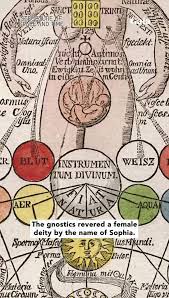
Another group of Gnostics, the Sethians, would contribute another critical concept to the cluster of ideas around the word “Aeon.” Until fairly recently, what was known about their beliefs came from the writings of Irenaeus, a Second Century Bishop of Lugdunum in Gaul. The Sethians’ focus was mainly on the period before the Creation Narratives in Genesis, seeking to understand the origins of God. They presented a largely negative theology, describing the immobility and ineffability of the Divine.

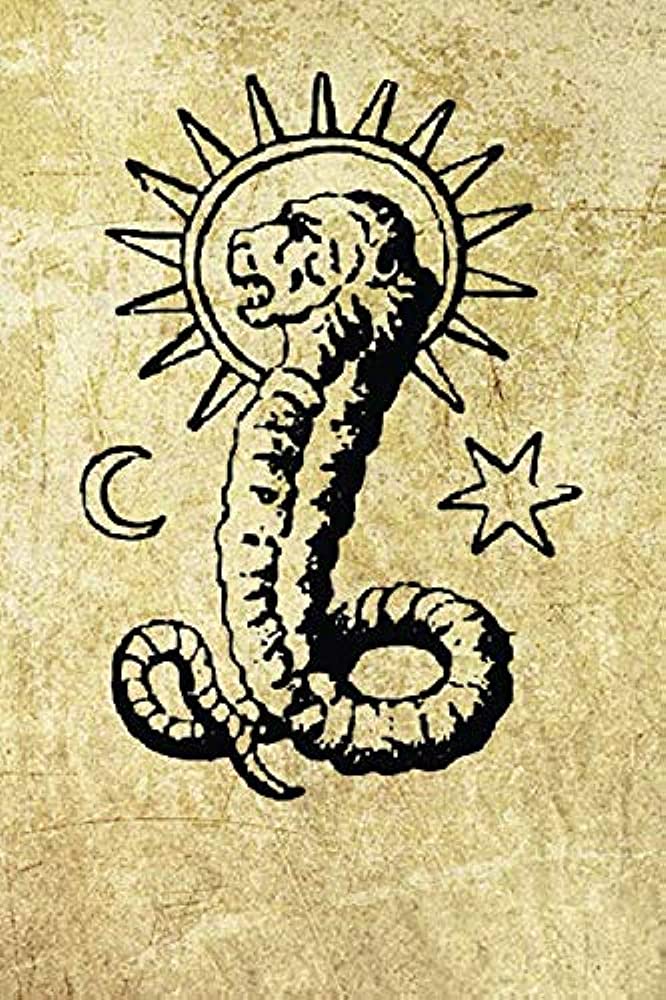
The Sethians shared with the Valentinians a belief in pairs of sexually charged Aeons emanating from the One. The first was Barbelo, referred to as “The Eternal Aeon.” Together God and the Aeons were in a Pleroma. Within the Pleroma, however, a crisis occurred, leading to a figure with a lion’s head on the body of a snake called Yaldabaoth. Yaldabaoth would steal the Divine capacity to create from the Aeon Sophia and use it as a demiurge, creating the material world separate from the fullness of the divine in the Pleroma. To do this, he spawns beings called Archons, who aid in building Materiality. The Yaldabaoth creates Adam, mistakenly leaving a portion of the divine power stolen from Sophia within this new being. This capacity would, in time, transfer to the third son of Adam, Seth, from whom the movement would take its name.

The actual thoughts of the Sethians were largely unknown until the discovery of the Nag Hammadi Library in 1945. As such, misapprehensions of their ideas and practices abounded in discussions of this sect. One of the Nag Hammadi Library texts is a set of hymns known as “The Three Stele of Seth.” These hymns praise Barbelo and outline a process of Ascension by the one singing the hymn from the material realm, up through the Aeons into the realm of Barbelo.


This process of Ascending demonstrated in “The Three Steles of Seth” would leave a mark on the practical methods associated with the Gnostics. It was held that they sought to return through the Aeons to the One and to do so that they must pass through the challenges of the Archons. Possibly based upon diminished knowledge of the Egyptian Book of the Dead, these Archons were thought to be passable through certain words and actions. Knowing the word to get past a particular Archon would provide you access to the associated Aeon.

Thus we have the origins of the relationship between Word and Aeon.

Tuesday Quote


“You never believed in the meaning of this world, and you
therefore deduced the idea that everything was equivalent
and that good and evil could be defined according to one’s
wishes. You supposed that in the absence of any human or
divine code the only values were those of the animal world –
in other words, violence and cunning. Hence you concluded
that man was negligible and that his soul could be killed,
that in the maddest of histories the only pursuit for the
individual was the adventure of power and his only morality,
the realism of conquests. And, to tell the truth, I, believing
I thought as you did, saw no valid argument to answer you
except a fierce love of justice which, after all, seemed to me
as unreasonable as the most sudden passion.

“Where lay the difference? Simply that you readily accepted
despair and I never yielded to it. Simply that you saw the
injustice of our condition to the point of being willing to add
to it, whereas it seemed to me that man must exalt justice in
order to fight against eternal injustice, create happiness in
order to protest against the universe of unhappiness. Because
you turned your despair into intoxication, because you freed
yourself from it by making a principle of it, you were willing
to destroy man’s works and to fight him in order to add to his
basic misery. Meanwhile, refusing to accept that despair and
that tortured world, I merely wanted men to rediscover their
solidarity in order to wage war against their revolting fate.

“As you can see, from the same principles we derived quite
different codes. Because you were tired of fighting heaven,
you chose injustice and sided with the gods.

“I, on the contrary, chose justice in order to remain faithful to
the world. I continue to believe that this world has no
ultimate meaning. But I know that something in it has a
meaning, and that is man, because he is the only creature
to insist on having one. This world has at least the truth of
man, and our task is to provide its justifications against fate
itself. And it has no justification but man; hence he must be
saved if we want to save the idea we have of life. With your
scornful smile you will ask me: What do you mean by saving
man? And with all my being I shout to you that I mean not
mutilating him and yet giving a chance to the justice that
man alone can conceive.”

Alber Camus, “A Letter to a Friend”

Aeon in Gnosticism

In the Second Century of the Common Era, the notion of “Aeon” underwent a critical transformation within the teachings of a Gnostic Christian heresy called Valentinianism. This movement originated with the Egyptian thinker Valentinus, born in 100 CE and educated in Alexandria. He was involved with the Catholic community in Rome. Though none of his texts survived to the present*. Nonetheless, his ideas, or ideas attributed to him, would develop into a significant Gnostic movement.


Key to the Valentinian ideas is the notion of there being within the Celestial Realm a series of Worlds, or “Aeons,” which exist as immaterial forces. In total, the Valentinians are said to have believed in 30 Aeons, divided into three sets of paired Aeons called “Syzygies,” and were thought to have a sexual polarity. Our knowledge of these comes not from the Valentinians but the Church Father Tertullian.


The First, and therefore most perfect, Aeons are known as the Ogdad. Its pairs of Aeons are:


• Bythos (Profundity) and Ennoia (Idea)
• Nous (Mind) and Aletheia (Truth)
• Logos (Word) and Zoe (Life)
• Anthropos (Man) and Ekklesia (Church)


The Second set of Aeons thought to derive from the interaction of Logos and Zoe and known as the Decad, are:


• Bythios (Deep) and Mixis (Commingling)
• Ageratos (Unaging) and Henosis (Union)
• Autophues (Self-Existent) and Hedone (Pleasure/Bliss)
• Akinetos (Immovable) and Synkrasis (Blending)
• Monogenes (Only-Begotten and Makaria (Happiness)


The Third set of Aeons, derived from Anthropos and Ekklesia and known as the Dodecad, are:


• Parakletos (Helper) and Pistis (Faith)
• Patrikos (Paternal) and Elpis (Hope)
• Metrikos (Maternal) and Agape (Love)
• Ainos (Praise) and Synesis (Intelligence, Understanding)
• Ekklesiastikos (Ecclesiastical) and Makariotes (Happiness)
• Theletos (Willed, Longed for) and Sophia (Wisdom)


Valentinianism would spend over two centuries interacting with the Catholic Church as a rival school of thinking. Surviving sources of this time hold the Valentinians as the most sophisticated of the Gnostic Schools and most intellectually rigorous. Their ideas, which had an Emanationist quality, would face criticism and conflict with Plotinus and the Neo-Platonists. Nevertheless, their Emanationist model of Aeons would continue to influence those trying to understand the Gnostics and the concepts of Late Antiquity.

*It is possible that The Gospel of Truth in the Nag Hammadi collection may be one of his texts as that was a title attributed to him from sources in Late Antiquity.

Logos and Magi

The English word “Magus” comes from a Latinized form of the Greek μάγος magos. The Greeks, in turn, acquired the term from Persian magus. In the 4th Century, the word entered into the Greek vocabulary following their contact with practitioners of Zoroastrianism. The Greeks did not quite understand the Zoroastrian tradition, but what they did derive from their contact was the idea that the Magos served a priestly function within this tradition and were mainly concerned with the stars of the night’s sky as a means for foretelling the future as well as being adept at practical magic. Our word “magic” derives from magos, and the associated terms mageia and magiko displaced the indigenous Greek words for the practice of magic.


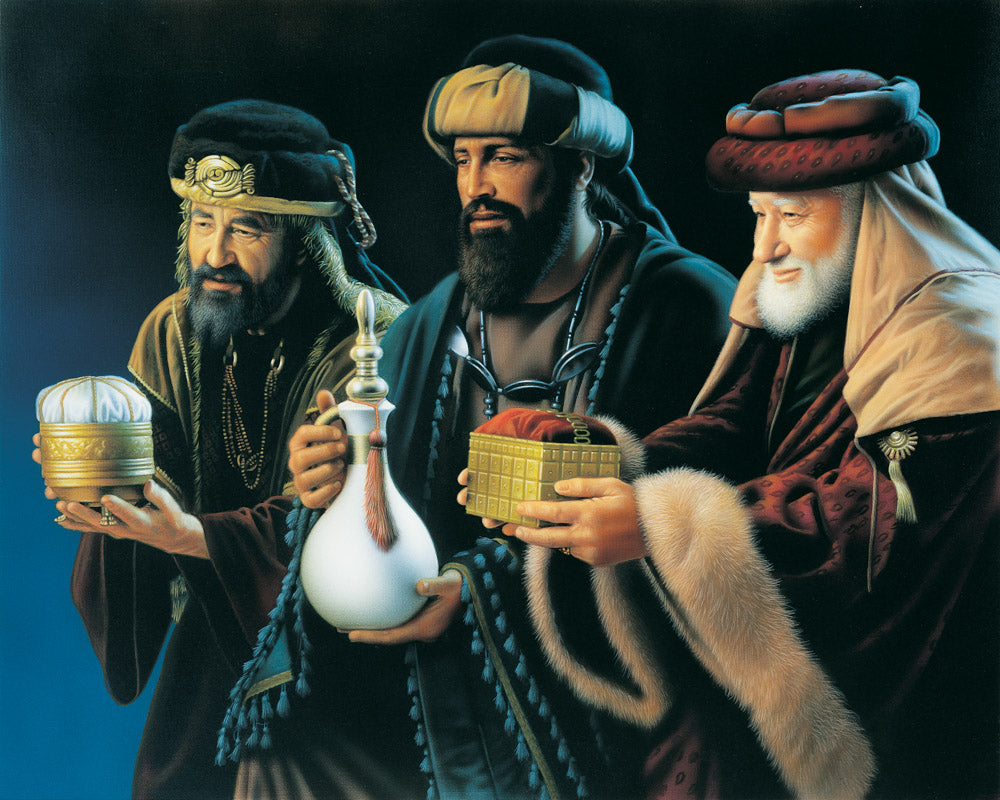
For most people, this primary exposure to the idea of a Magus, or more the plural Magi, derives from the account of the birth of Jesus in the Gospel of Matthew. It is worth noting that Matthew was believed to be writing his account of Jesus’ life and ministry to a Jewish Christian community in Syria and emphasized the failure of the Jews to accept the Messiah and instead Christ’s mandate to convert the Gentiles. As such, the appearance of the Magi represented an early moment where the wisdom of the non-Jews concerning Christ was greater than that of his own people.


It was said that attendant to the birth of Christ, that Magi had witnessed an unusual stellar phenomenon, the so-called Star of Bethlehem, and took this as a sign that an important new teacher was to be alive in the world. These Magi set off to visit the newly born future Teacher and brought gifts signifying his importance: Gold for temporal Ruling Power, Frankincense for the Sacred, and Myrrh in preparation for his anointment in death. Although the number of Magi is never mentioned in the text, nor are their names, a tradition of there being three Magi, and expanded stories about their names and origins, entered early into Christian narrative.*


This notion of the Magi having discovered “one of their own” in their recognition of the Christ, combined with the Philo influenced doctrines related to Logos found in the Gospel of John, helped to suture together an association between the Magus and the Logos, and situated Christ within the frame, at least for some. More importantly, though, the name of Magus would enter into Christendom via the previously mentioned tale of Simon Magus and his status as a pretender to being the Messiah.

*Few people realize how much religious narrative has in common with Fan Fiction.