Preconditions to the Primary Utterance

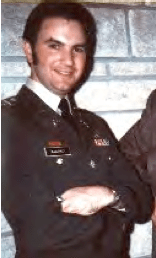
It is not uncommon for there to be remarkable outcomes when a Magus makes what seems like a minor comment. In some cases, these comments transform in time into major life-defining events. Take, for example, this short inscription to Michael A. Aquino from Anton Szandor LaVey in his first copy of The Satanic Bible

           “To Michael A. Aquino, who shall become more than can now be stated.”

During the expansion of the Church of Satan, Magus LaVey suggested to Grotto Leaders that they spice up their rituals using texts on anthropology, fiction, or other seemingly non-occult sources. Then-Priest Michael A. Aquino bought a 1966 reprint of Budge’s Egyptian Language. He used the information in the text to make the Workings of the Ninevah Grotto in Louisville, KY, a bit more “spiffy.”

Chapter IX of Budge’s work focuses on Egyptian Verb conjugation. While many of the other chapters use different words to illustrate his points, this chapter is built around the conjugations of one verb root, hpr, which Budge translated as “Become.” The chapter uses several notable occurrences of this verb root to teach the basics of conjugation, including a short section of a spell formula from the Papyrus Bremner Rhind IV. From this spell formula, the sentence “Xepera Xeper Xeperu” was first read by then-Priest of Mendes Aquino.

Egyptian themes would not be predominant in Aquino’s continued Work within the Church of Satan. As seen in his reprinted articles in Church of Satan, his interests were wide and varied. He took a cosmopolitan approach to the various forms that “black magic” took across historical and fictional cultures. He retained an interest in Egypt, however.

In the spring of 1975, he conducted a Working known as “The Sphinx and the Chimaera” (reprinted in Temple of Set). This Working is notable for two reasons. This Working was the first to be conducted using the restored Enochian that would develop into the Word of Set. Secondly, the report of the Working takes the form of a long discussion between two mythic creatures observed by the Magician. Much of the discussion focuses on the works of Plato and, in some small ways, the likely Egyptian origins of much of Plato’s ideas. This passage quoted by the Sphinx is significant to our discussion when talking about Egyptian notions of time, cyclical regeneration, and immortality.

I was the spirit in the Primeval Waters.

He who had no companion when his name Came Into Being.

The most ancient form in which I Came Into Being was as a drowned one.

I was he who Came Into Being as a circle.

He who was the Dweller in his Egg.

I was the one who began everything, the Dweller in the Primeval Waters.

First, the Wind emerged for me, and then I began to move.

I created my limbs in my glory.

I was the maker of myself; I formed myself according to my desire and in accord with my heart. “

The text attributes this quote to R.T. Rundle Clark’s Myth and Symbol in Ancient Egypt page 74. It does not mention that this passage was drawn from a version of the Heliopolis cosmogony. This same cosmogony is the source for the Papyrus Bremner Rhind spell for the “Slaying of Apep” that provides the core of Budge’s Chapter IX.

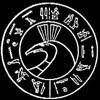
Sometime in May of 1975, Magister Aquino consulted works on Egyptian art. Nearly all of the images of Set were destroyed, reminding of Budge’s discussion in The Mummy of the destruction of much of the imagery of Set by later cults, most notably that of Osiris. Magister Aquino would, in a moment of playfulness and “Sudden sympathy for this ‘old mythological figure,'” decided to restore an image of Set with his own hand, taking from Budge a line of hieroglyphs from a hymn that translates to English as “Let my Great Nobles Be Brought to Me.” Satisfied with the results, he put the image in his collection, not thinking much more about it.
Within a few months of that drawing, the entire Initiatory World he had dwelled within would collapse. As we have seen, he had the seeds for its renewal; he simply did not know it.
Refinements within the Aeon of Set

In addition to the concept of Aeons, Dr. Aquino would also bring his new vision to the Degree of Magus. This would transform the concept with greater clarity and allow it to be used as a tool for greater understanding and innovation. 

Crowley had felt that each Aeon only had one true Magus: the one who Uttered it into Being. Others could, in theory, become something “Magus-like” provided they were willing to subordinate themselves to the true Magus. Dr. Aquino would elevate the dignity of this notion without the sense of subordination. While it might be true that each Aeon would only have one Utterer who called the Aeon into interaction with Time, other Magi would, and should, develop within an Aeon. Their Words that shift the balance of Understanding within the Aeon and enhance the application of the Aeon’s Primary Word. His term for this would be an “Aeon Enhancing” Magus.

Reflecting the seriousness of the Magus V° within the Temple of Set’s structure, Dr. Aquino would create a system of Recognition that requires the High Priest or High Priestess of Set* to evaluate if the proposed individual as pushed beyond the Temple’s present Understanding in a manner which could enhance Xeper. For the High Priest’s or Priestess’ Recognition to be valid, it requires the confirmation of the entire Council of Nine, the Temple of Set’s board of directors made up of its senior Initaites, to affirm it so. This is the only unanimous vote required by the Temple’s By-Laws and, thus, the most difficult, reflecting the seriousness by which the V° is held. 

Dr. Aquino would embrace the total synthesis of ideas I have been discussing with a tremendous force of clarity. The Prince of Darkness was, in fact, the “God of Magicians,” as some had claimed, but he was not the simple malevolent character of the Christian Satan. Instead, the Prince was a figure who philosophically could be seen as the Platonic First Form of Isolate Intelligence, a consciousness that arises distinct from all else in its uniqueness. From this First Form, each individual was shaped by and resonant with it and could become more resonant by its own development. In the mythological image of Set, the Egyptian God of expanding barriers and overcoming delusion, it would be primarily explored as the Temple’s Patron. This philosophical identification of Isolate Intelligence would also open the door for all other human apprehensions of this Principle, whether mythological or fictional, to be studied and explored as models of Xeper.

The misrepresentations of the Messianic Kabbalah of the 19th Century occult world were dismissed as essentially a collection of overstuffed and distracting images. However, the Enochian material of John Dee would be retained in the new Setian vision. This material would be restored to the initially transmitted orthography that Dee and Kelly had received rather than The Golden Dawn’s speculative Elemental and Kabbalistic re-interpretations. The English translations of the Enochian were subject to an Initiatory re-evaluation, leading to the 19 Parts of the Word of Set. The Word of Set would outline the emergence of life on Earth, of early human consciousness, of a flourishing of that consciousness in interaction with the Prince of Darkness, and the eventual enhanced remanifestation of this interaction under the guise of Four Orderings. Here it was not an Apocalypse that the Keys foretold but a time when a newly emerging human consciousness would come into being, seeming as distant to present man as present man’s condition would seem distant to Australopithecus.

In an act of Play, Dr. Aquino integrates the Apocalypse of John of Patmos by accepting Crowley’s identification with the Beast of the Sea by taking on the title of the Second Beast, the Beast from the Earth. This Second Beast of “two horns” would heal the crippling wounds of the First Beast and begin the Reign of the Dragon. Thus there was an Initiatory succession from the Work of the Aeon of Horus. Still, this feature was secondary to the greater Work of the Aeon of Set.

Most importantly, Dr. Aquino, reflected in Xeper, would make the individual’s transformations central to the Aeon of Set. He saw no need to announce the Aeon from every hilltop or to amass followers. Aside from the minimal information about what it was and how to contact it, there is little in the way of advertisement for the Temple of Set. It would not be by media solicitation that the Temple would become known but by the tales of individual transformations of those it had helped develop. In this manner, the Temple of Set would act as a beacon to those most dedicated to their development from all walks of life and stations in culture for the mutual benefit of their development.

By the Work and Word of the Magus Ra-En-Set, it has become possible for Setians to integrate and enhance all that had come before in the ways of human development. No culture was considered out of bounds, nor were they limited to purely “occult” topics to find the tools they needed for the Xeper. The emergence of the Aeon of Set was seen as a kind of transformative “reset” of the human condition, making all that humanity was and had been subject to the need for a new evaluation to find those tools, ideas, and methods that would allow for a reshaping of the future.

In terms of the general orientation of Setian thought it would be a break from much of the occult past, including its own. While Aleister Crowley has created a largely confrontational atmosphere around his Work, and Anton LaVey had taken a relatively cynical and pessimistic view of humanity as he aged, Dr. Aquino would bring to Setian thought a remarkable exuberance, an electrifying optimism, and a promise of wonders and marvels to be enjoyed by all who dared to pursue Xeper.

*Only one person holds the High Priesthood of the Temple of Set at a time. This role is not “for life” but rather for the period it is productive to the individual engaged in the Work of the High Priesthood and to the Temple of Set. The High Priesthood is not based upon gender, though the gendered title will be used as appropriate. At the time of this writing, six individuals have acted in this capacity, four masculine-identified and two feminine-identified.

Ra-En-Set and the Aeon

Dr. Michael A. Aquino’s experience on the North Solstice of 1975 CE, or the Year X of the Age of Satan, as recorded in the Book of Coming Forth by Night, has dramatically clarified the doctrine of Aeons, Magi, and Words. I will not be going into a complete account of this text, what led to its reception, or how Dr. Aquino has interpreted it. For that, his excellent memoir titled Temple of Set will provide copious details and a general introduction to the fundamental theories underpinning Setian philosophy.

The Book of Coming Forth by Night suggests that this Aeon of HarWar’s primary temporal duration lasted from the 1904 CE reception of the Book of the Law to 1966 CE, where “The Age of Satan” superseded it. This had been a time of purification, where Initiates could purge historically accumulated stasis and delusion to make way for a new vision. At the moment of the North Solstice, 1975 CE, the Age of Satan was undergoing its full realization as the Aeon of Set, which was encapsulated in the Word of Xeper, meaning most essentially the imperative “Become!” to be Uttered by Michael A. Aquino as its Magus under the magical name Ra-En-Set, “He Who Speaks as Set.”

The Book of Coming Forth by Night accepts that Crowley’s 1904 CE reception of the Book of the Law had opened an Aeon of Horus. Still, the Aeon of Horus described is not that of Horus the Younger. Instead, the force attempting to bring people into its Aeon was the Great Horus, also known as Horus the Elder.

Rendered in the text as HarWar, and in the contemporary transliteration of Egyptian as Her-ur, Horus the Elder was one of the oldest deities within the Egyptian religion. Instead of being the son of Isis and Osiris, Horus the Elder was one of the five neteru recognized as siblings. Along with Isis and Osiris, and Seth and Nephthys, Horus the Elder helped lay down the pattern of being for humanity, each with a different emphasis. Horus the Elder’s emphasis was upon kingship and command authority. This figure was reflected upon the Stele of Ankh-ef-en-Khonsu as both the fused neter form of Ra-Harakhty and the winged disc figure of Horus of Behdet. Indeed the anteceding materials for the Book of the Law all point towards this figure of Horus the Elder. However, this was unknown to its receiver, Aleister Crowley.

From the start of the Aeon of Set, the notion of Aeons received from Crowley would have to be re-evaluated. If taken seriously, his Aeon of Horus had not run the course of the ~2000-year interval of the Equinox of Aquarius. Crowley’s association not only of his Aeon of Horus with Horus the Younger was in error, but there was a reasonably good chance that his Aeons of Isis and Osiris, at least as he understood them, had also been in error.

Dr. Aquino would return to Florence Farr’s Egyptian Magic and find the root of Crowley’s notion of Aeons in this text. Rather than ruling the Zodiacal periods, the Aeons had been a Gnostic notion tied to one’s individual Initiation. As one developed and became, one could gain access to increasingly more sophisticated Aeons or refined Understanding while still retaining access to the previous Aeons accessed.

 The Aeons that had come into being in the 20th Century CE were not a product of linear time progression but reflective of the increasing sophistication of Initiates. They need not be tied to any fixed length of time but were a series of lenses through which one could view themselves, their interactions with others, and their relation to nature. As Dr. Aquino writes, “[An Aeon] is simply an attitude which one chooses or is conditioned to adopt.”

As such, when one emphasizes nurturing ideas and individuals, one could be said to inhabit the Aeon of Isis. When one was acting to preserve the patterns of the past, one could be said to inhabit the Aeon of Osiris. When one was acting to find one’s place in the ruling systems of the world and act with command authority, one could be said to inhabit the Aeon of Horus. Now, with this one understanding, when one was pushing beyond the boundaries of the well-lit world of the known into the outer darkness of the unknown to seek individual integration, one could be seen as inhabiting the Aeon of Set.

The fundamental bedrock of the Aeon of Set was, and always will be, that sense of Xeper as Become!

Feedback on LaVey Writing

Someone who identifies as being involved with the Church of Satan asked me in a private discussion forum:

“Is it normal for [Setians] to have a hard time moving on from Satanism? They’re free and clear, why bother addressing Satanism at all?”

One of the running themes in Foundation is a process of cultural collapse while a small group of people are attempting to extract what information about their civilization is essential for survival after the collapse. It becomes a significant test of assumptions, requiring much redaction and realization about what matters and what was “additive” from individuals, cultural practice, etc.

I’m one of those types that tend to look at the entire genealogy of the ideas that have shaped me while evaluating the things that were personal to the thinker, the things that matter, the ethical implications, etc. It’s mostly a personality quirk of being someone with fast recall and an encyclopedic-style memory. If I have to live with all of this stuff in my head, I’m prone to evaluating it before transmitting it.

I am more of a “transcend and include” type when looking at developments. Excluding the influences of the past that shaped ideas that have shaped me seems dishonest. At the same time, I don’t expect someone to have worked with ideas from any thinker to the depth or manner that I may have personally, so I tend to look for the things that may matter and extract them. That’s probably an academic discipline bias. My background is in anthropology, particularly human origins, and passing on the essential discipline insights without forcing someone to know 45 citations is a skill that needs to be honed.

LaVey is by no means the only person whose work I’ve treated in that fashion. I’m fairly well versed in Crowley’s material, most post-Crowley Thelemic movements, Chaos Magic, and some stuff too niche to mention. When I do this with LaVey, it tends to raise more hackles for better and worse.

As far as Setians and the 1966-1975 Church of Satan period, those are our roots. Past that, not so much. Individual Setians are on their own in determining what, if anything, is of value from LaVey, the early Church, etc. Most Setians I’ve known for over 25 years had a largely ambivalent attitude. Their interest in being Setians was, in many cases, despite our roots in the Church of Satan, not because of them. In that sense, it is much less concerned that Setians can’t move on from LaVey than they’ve simply ignored him.

My Lack of Respect for Anton LaVey as a Person

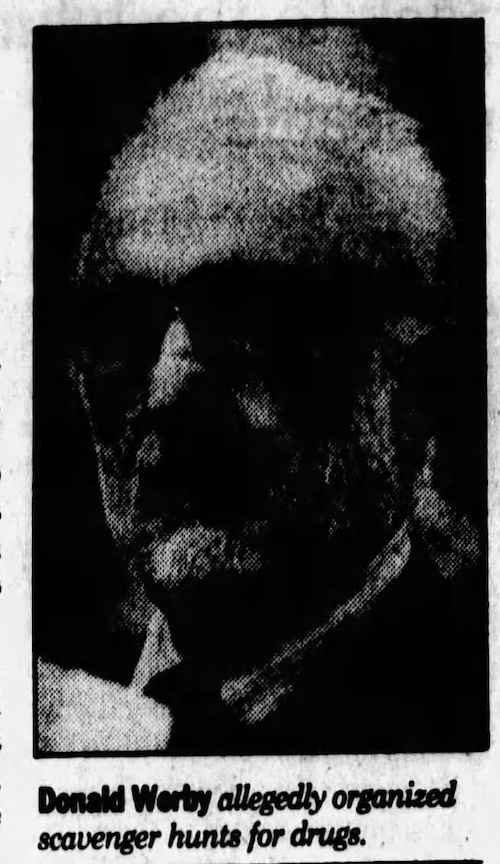
picture and caption from The San Francisco Examiner November 28, 1989

I mentioned yesterday that my sense of Anton LaVey has changed. The most significant of these has been in the last two years while researching the various people who were instrumental to the early “Magic Circle” phase of his career and, frankly, finding things out about who LaVey was willing to consider friends that have made me dismiss him as a human being.

Dismissing him as a human does not invalidate the parasocial impact of the idea and image LaVey co-created with his admirers. Indeed, it has been far more interesting to see what people do with the fictional image of LaVey as a kind of “magic feather” towards their development than there is anything of interest in this dead Magus. But, my respect for and veneration of those acts by individuals does not mean I should hold my tongue on the realities of who LaVey was. Indeed, I have been drafting a “Death of the Magus” piece about dealing with the teachings of people who are “problematic” or worse.

I will be blunt. Anton LaVey spent his entire life, from 1958 until he died in 1997, in a questionable financial situation with Donald Werby. Werby was a significant real estate figure in San Francisco. Gus Russo alleges in Supermob (2008) that Werby was connected with the Chicago Mafia’s move into the city.  

Werby was indicted on 22 counts of pedophilic rape for involvement with a prostitution ring focused on runaway teenage girls addicted to crack. As a result, Werby pleaded guilty to two misdemeanor charges of contributing to the delinquency of a minor. Werby agreed to pay a $300,000 fine and was sentenced to three years probation. All the felony sex charges, with their potential for prison time, sex offender registration, civil commitment, etc., were quietly dropped. A nearly 600 page transcript of the Grand Jury hearings were publicly released going into the details of his actions.

The original charges were brought in 1988, with the Grand Jury phase in 1989. By 1990 Werby had paid his pittance and moved on. He would die in 2002.

Most people, if they know Werby’s name in relation to LaVey, know him for the purchase of the Black House in 1992. LaVey was well aware of Werby’s proclivities as his arrest, indictment, and payout were the subject of considerable media coverage, as demonstrated by a simple search of Newspapers.com. LaVey knew precisely who and what Werby was and was more than comfortable accepting his financial support until his death. If LaVey’s daughter Zeena’s account of her father in “Anton LaVey: Legend and Reality” is to be trusted, LaVey knew firsthand what Werby was allegedly capable of under LaVey’s own roof and did nothing for fear of losing access to financial support.

I have wrestled for a few years with this. My knowledge of Werby began with his name being dropped in both Church of Satan writings about LaVey and Dr. Aquino’s account of his experiences with the Church of Satan. In Dr. Aquino’s case, Werby’s position as one of LaVey’s “commissioned” or “underground” Priests of Mendes was a significant part, though not the totality, behind his repudiation of LaVey in 1975. For Dr. Aquino, this had to do with the ethics of the Priesthood and his sense that if someone was bringing something of note to the Church, there was no need for secrecy. The information about sexual predation by Werby was not then known.

My knowledge of Werby’s past came as a result of a friend who pointed me in the direction of a few interviews and statements by Nikolas Schreck on the topic of Anton LaVey and Donald Werby. Mr. Schreck had left breadcrumbs which I was compelled to follow. Having done so and having the stack of San Francisco Examiner stories to back it, I owe Mr. Schreck thanks. We may disagree on other things, but his forthright sensibility on this topic cannot be ignored.

Mr. Schreck’s most forthcoming discussion of Werby and the LaVey Household can be heard here.

For me today, I cannot avoid the complete lack of character, ethics, or basic human decency that LaVey’s continued association with Werby represents. Similarly, unlike many, I am uncomfortable writing about Anton LaVey in any positive way without being honest in situating his lack of human decency for my readers. That his failing were hypocritical to the creed he claimed to be following suggests to me, among other things, that those who had their Initiations begin by his Work and the Church of Satan were right to repudiate him and move on when they did.

I am, however, still quite aware of the deeply embedded ways the image of “Anton Szandor LaVey” is for many people. Long before social media, LaVey was capable of leveraging parasocial relationships especially in those adolescent readers who found his book during pivotal moments in their development. If you are one of those people, that image in your mind that has so important was always a thing of your own creation. Reclaim that image for yourself and leave the dead to the dead.

LaVey’s Greater Magic Reconsidered

While the purely psychodynamic interpretation of LaVey’s methods fits with the agenda of his apologists uncomfortable with the magical aspects of LaVey’s Work, it does not match his sense of what he was doing. He was axiomatic about the importance and value of Greater Magic to create change beyond mere psychodynamics, making it a foundational piece of his Eleven Satanic Rules of Earth.

Emotional release in the models that LaVey was using for understanding magic drew heavily from the works of Wilhelm Reich. Reich’s model was that of bio-energetic psychology, where psychological processes accompanied a real energy phenomenon. This energy could be channeled and directed in LaVey’s interpretation of Reich through the concentration and focus provided by Greater Magic. While he was one of the first to articulate this Reichian magical theory, Israel Regadie’s works have a similar model.

This energy model underlies many of LaVey’s insights towards magic in The Satanic Bible. In particular, the argument against animal sacrifice in “On The Choice of a Human Sacrifice” rests almost entirely on a Magico-Reichian notion of death and emotional discharge, releasing energy capable of being molded through ritualization.

This, in part, explains the basic outline of LaVey’s key rituals:

  • A performative utterance of the magical intention
  • A method of full emotional engagement through a complete emotional cycle
  • A daimonic capping of this experience through the use of the Enochian Keys

The performative utterance, emotional cycle, and daimonic capping pattern can be adapted to idioms other than the Enochian and forms one of the most straightforward and valuable approaches to operative magic.

There is a decent introduction to Reich’s ideas by Danny Lowe available at

Wilhelm Reich by Danny Lowe

Performative utterance can be a somewhat complicated topic but is well worth investigating. Ipsissimus Flowers and Ipsissimus Webb have written on the importance of performative utterance to magic. There is a decent short introduction to the idea in the following video.

As far as daimonic systems go, Setians are free to explore as they will. If no particular daimonic systems strongly call to you, but you want to get started with Greater Black Magic, I would recommend a kind of return to our roots. Use Dr. Aquino’s Word of Set material as your daimonic capping in your Workings, connecting what you do to the Aeon’s roots and the Work of Ra-En-Set. It is available as a part of Dr. Aquino’s Temple of Set and his Satanic Bible: Re-Vision

The Taboo of Satanism


In a discussion several years ago, someone raised the following about Setian “taboos.” My thoughts on LaVey on a personal level have changed a good deal since I originally wrote the following. However, it remains something I stand behind. 

The Taboo of Satanism: Do we forget or avoid the idea we have Satanic roots? It’s our past; we should draw/use that. Yes, we want to evolve and grow from what we were and what we came from, but we shouldn’t ignore or hide it.

I chalk this up first and foremost to the healthy and essential impulse begun early in Working II to expand the Temple of Set beyond its Satanic Roots and to embrace the broader manifestations of left-hand path Initiation in other cultural contexts running headlong into the family dramas of Anton LaVey following his death. The second issue, which included statements against LaVey by his daughter and son-in-law and their intentional targeting to remove anyone with the faintest interest or praise for Anton, created significant toxicity around the topic of Satanism within the Temple.

We are certainly something unique in the spectrum of those practicing magic. We are no more Satanists than we are Thelemites, and rightly so. Yet it is ironic that within the contemporary Setian culture, we have far more Setians feeling comfortable talking about Crowley and Thelema, a subject that the Book of Coming Forth by Night dismisses as, at best, a curiosity. In contrast, an interest in LaVey still has this sense of disgrace and mild discomfort. I see this far more in I° and II° than I do the Priesthood, and when I do, I am often reminded of LaVey’s comment in the interview he did at the height of his High Priesthood for “The Occult Explosion”:

“The Devil made me do it” has always been a stock alibi. Once it held, and held very firm. Now, fortunately – fortunately for us – it has become ludicrous to say, “The Devil made me do it.” Yet many, while laughing, still play the old game of self-deceit and blame the Devil in one way or another. So the old game is still going on. This is made amply clear in, of all places, the very world of the occult. “Witches,” who held the Devil’s name for centuries, now refute Satanism with a passion, employing it as the other side of the fence. All manner of occultists, from ESP researchers to faith healers, denounce Satanists as worthless, meaningless, dangerous, ad nauseam. Never is there to be found a positive adjective about Satanists. We Satanists smile at such transparencies – for they are transparent opinions; their motivations are most clear. It shows that even those who now claim emancipation from inquisitors need devils themselves, in order to make their art more palatable to others.

Man must quit kidding himself. Only when he emancipates himself from dubious interpretations of good and evil – when he can truly rise above good and evil, beyond good and evil, realizing that these terms are probably the most relative terms in his existence; when he can accept the long, obscene name of “Satan” [because that is a dirty word, “Satan” – the occult world seems to find it even more so]; when he can accept this word, this name into his vocabulary as a sound to be honored – then he will be free! Until then he will walk in fear of the very scapegoat he has created, and his potential guide will remain his nemesis.

Mind you, personally, I have little interest in the media Satanism that arose in the vacuum of Anton LaVey’s retreat within the Black House. The entire aesthetic concocted and propagated about Satanism by various media industries leaves me cold. In that oddly, I have an ally in LaVey who, when reflecting on what arose in his retreat, wrote:

Now, in your End Times, you blame Death Metal and its influence on youth. You fret over the quality and content of their sounds. You demand warning labels on shrink-wrap. You silly mush-heads. YOU listened to the warnings and examples set forth by the Blattys, Pazders, Geraldos, Oprahs, Sally Jessies, Bob Larsons and their identity-starved stooges. I wanted to tell your children what was RIGHT about Satanism: encouraging sensuality with achievement, outrage with justice, nonconformity with wisdom. Instead, YOU provided media saturation informing them what “real” Satanists do, what kind of noises they make when possessed. YOU encouraged them to rebel by the aesthetic standards YOU provided, and still you grouse when they gravitate to Slayer, Ozzy, Electric Hellfire Club, Mercyful Fate, Deicide, Marilyn Manson, Acheron, Morbid Angel.

Do you know what? I think those bands are great. I would also like your kids to listen to Liszt, Borodin, Saint-Saens, Dvorak, Ketelbey, Wagner, Puccini, von Suppe, Rossini, Romberg, Kern, Friml, Al Jolson, Russ Columbo, Nelson Eddy, Nat “King” Cole, and the marches of John Philip Sousa. But you never gave me the time to explain THAT to them. As panderers, you were too busy crinkling the fat around your avaricious eyes and rubbing your money-grubbing hands and thinking of ratings. Or else, as audience, you were too dim-witted to think anyone on TV or mainstream print could be misleading you about Satanism. It runs YOUR life, so it must be OK for your children.

You hypocritical self-righteous fools. YOU made Death Metal and Satanic Metal bands what they are, by YOUR standards of blasphemy –but with significant modification. Now the performers and the audiences aren’t shunning the idea of Satanism. They now greet each slavering monster as a friend. They raise their arms in Satanic salute. By whatever form their sounds take; the lyrics, barely understandable in their guttural roar, hurl all your warnings and admonitions back in your faces.

YOU set the disturbing aesthetic standards which concern you now. If something bold and new will emerge from it, it won’t be to your credit. It will be because enough young people are seeing OTHER arenas of Satan. Your hysterical plan has backfired. YOU brought about your own Apocalypse, like the stupid masochistic victims that you are. You needed a Hell according to your own comfortable requirements. It didn’t quite work out that way. Satan doesn’t play by network, Marvel Universe, or Nintendo rules; or by Augustinian rules either. Soon your children will come walking in the front door with a Satanic Bible in one hand and a CD of Mussorgsky’s Night On Bald Mountain in the other. Then, you’ll know you’re in real trouble. You wanted Hell. I’ll give you Hell. It won’t be fun. The Devil’s Plan may not be your plan. Your Apocalypse is HERE. YOU brought it about. Take it. Suffer. It’s all yours.

I happen to enjoy the eclecticism, pragmatism, iconoclasm, and anachronisms of our Satanic heritage and its potent use of the themes of Sex, Sentiment, and Wonder. I like “encouraging sensuality with achievement, outrage with justice, nonconformity with wisdom.” I feel that its foundational emphasis upon unhooking your lust, compassion, and anger from socially approved targets to those rooted in your own desires helps to forge an inner strength like few other methods while avoiding occultnik retreat towards “Higher” nonsense. Its simplified approach to magic combines desire, aesthetics, timing, action, and knowing exactly where to exert your efforts. It is a refreshing alternative to the mental gymnastics most occultists do to avoid ever having to actually do magic.

That these things have often been the metaphoric Devil’s Baby tossed out with the personal bathwater of LaVey does the Temple of Set, and the Prince of Darkness, a disservice. 

The Age of Satan and the Masters of Suspicion

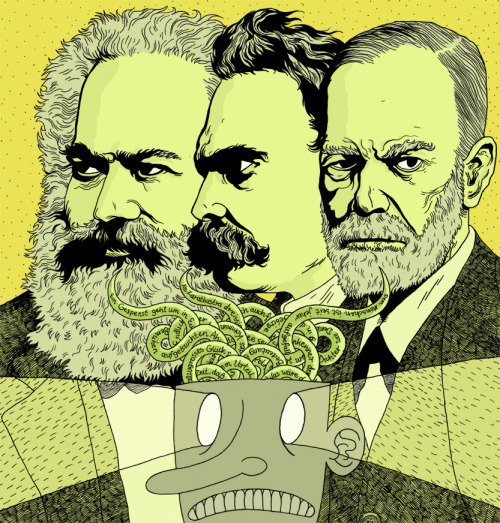
Several years ago, an Adept commented that Anton LaVey’s The Satanic Bible was a cynical approach to occultism. I countered that I saw it less as cynical than the first serious, magical response to those people Paul Ricoeur termed ‘The Masters of Suspicion.”

Who were the Masters of Suspicion? They were those figures who, at the end of the 19th Century, had cast profound doubts upon what had been up until them certainties about human nature. 

Charles Darwin had cast profound doubts not only upon humanity’s unique place in the scheme of nature but the very need for a personal God to explain nature’s existence. 

Karl Marx undermined the notion that human society was some sort of divine ordering by demonstrating rather clearly that it was the means by which society produced the good necessary to its survival that shaped its social organization.

Sigmund Freud undermined the sense that the self we identify with unreflectively was the only aspect of our being and that it behaved in a fully known fashion. 

And finally, Friedrich Nietzche, an unemployed Philologist, had managed to undermine the entire scope of how Morals were constructed and how values are extracted from experience to inaugurate what became termed The Transvaluation of All Values. Even more potently, he set up for the realization that no bare facts exist apart from the ways that they are interpreted.

These messages, like most messages, never penetrated organized occultism. Crowley completely ignored them, except for the parts of Nietzsche he liked. Austin Spare accepted Freud’s subconscious and tried to fuck it. But no profound impact of these realizations would take shape.

LaVey, however, would be different. Darwin had been right; we were animals, and embracing that fact could free us from crippling guilts. Marx was not only correct, but his insight could be personalized so that the way your self was organized would reflect how you provided for the necessities of your life and lifestyle. Freud was right, and there was a vast storehouse of signs, symbols, and dreams to be mined for personal pleasure rather than unenjoyed shame. Nietzsche’s Transvaluation would require a kick to really get started, and what better way to do that than to take the embodiment of all those discarded values of the past, Satan, and embrace it as your own? 

Rather than get into the historicity of this, let’s look at some practical applications:

1. Consider your own relationship to these Masters. What are your present understandings of biology, psychology, economics, and values? Have the doubts these figures raise been integrated into your understanding, or have they been unaddressed?

2. LaVey’s Utterance of Indulgence came at a time of broader social and personal upheaval. Spend some time looking at the events of the year 1966 and see if you spot anything that strikes you as indicative that something significant was on the horizon.

3. How comfortable are you with doubt? How do you account for the fact that regardless of how much you know, you will never know the entirety of all reality?

4. Look at any number of present conflicts in the world. How many of them appear to be, in part, those whose thinking is still in the dreams of our species’ childhood before these Masters now in conflict with those grappling, however poorly, with the awakening after them?

5. Take a look at your life and lifestyle. How are they shaping the being that you are Becoming? 

6. Read a copy of Tim Ferriss’ The Four Hour Work Week. How could optimizing your pleasure through building a lifestyle reflective primarily of your desires transform that Becoming? What values do you think would emerge for you by doing this?

7. Read a copy of Mihaly Csikszentmihalyi’s Flow: The Psychology of Optimal Experience. How would building a lifestyle reflective primarily of creating circumstances where you could experience the kind of Flow State he described transform your Becoming? What values do you think would emerge by making this your central concern?

The Magus in the Age of Satan

Although certainly, some may have thought themselves Magi, none were regarded as such by other magicians of the Aeon of Horus. No one had come forth within the Western Esoteric Tradition. No one had come forth in the Easter Esoteric Traditions. The only one who did come forth and was arguably Recognized by the World for a time was one who had come “from no expected house”: Anton Szandor LaVey (1930 CE – 1997 CE).

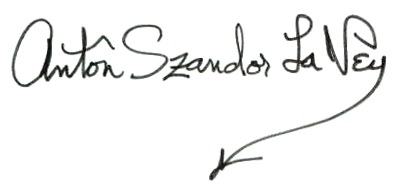
Anton Szandor LaVey began life as the more prosaic Howard Stanton Levey. The tale of Howard Stanton Levey and his transformation into Anton Szandor LaVey, Magus of the Age of Satan, has been well documented elsewhere. For those interested, the heavily documented Church of Satan by Dr. Michael A. Aquino is excellent. It makes a good contrast to the more personal account of LaVey provided in Burton Wolfe’s The Black Pope. This piece will focus on LaVey’s contributions to the notion of the Magus.

LaVey was not a trained scholar nor a close student of any field. He was an autodidact in several fields and a talented amateur visual and musical artist. What he excelled in intellectually was getting a sense of the undercurrents in human behavior. This was aided by his being perfectly comfortable accepting humanity as it was rather than as some ideology would prefer it to be.

This capacity gave him a rather dismal view of much of what passed for “occult wisdom,” with perhaps his best critique being summed up in the introduction to The Satanic Rituals:

Many magical curricula are padded beyond belief with pseudo-esoteric data, the purpose of which is:

(a) to make it tougher to learn since no one places any credence in what comes too easy (though they constantly seek shortcuts, giveaways, and miracles);

(b) to provide many things that can go wrong so that if a ritual doesn’t work, it can be said that the student was delinquent in his studies;

(c) to discourage all but the most idle, bored, talentless, and barren (translation=introspective, mystical, spiritual) persons. Contrary to popular assumption, esoteric doctrines do not discourage non-achievers but actually encourage them to dwell in loftier ivory towers.

Those with the greatest degree of natural magical ability are often far too busy with other activities to learn the “finer” points of the Sephiroth, Tarot, I Ching, etc.

 This is not intended to suggest that there is no value in arcane wisdom. But, just because one memorizes every name in a telephone directory, it does not mean he is intimately acquainted with each person listed.

A young LaVey gravitated towards the figure of Satan and the notion that He should have a Church of his own. This had been the one ingredient wholly lacking in the Golden Dawn’s integration of the magical ideas of the Early Modern Period and only shallowly touched upon by Aleister Crowley. For LaVey, the Prince of Darkness, its Witches and Warlocks, its profane rites, and Blasphemous proclamations would become the center of gravity of his synthesis.

LaVey had seen that the world had changed. The end of the 19th Century was the end of the Modern Period. The past superstitions were irrelevant to the human animal. Man’s religions were lies for the sake of individual psychological coping or mass social control. What those social forces had hated and repressed as the domain of Satan, humanity’s animal and carnal desires, as well as his higher capacities for reason and artistic expression unbound by “decency,” were not the Enemies of humanity’s fulfillment but the very road to it. Rather than cast out Satan, why not valorize this shunned emblem of all we were and ever could be?

LaVey’s ground-level acceptance of humans as they were rather than as anyone would wish them to be would coalesce into what has been Recognized as his Word: Indulgence. This would be the central principle behind his ideas and Teachings, the Word of the Age of Satan, and the first significant innovation in the Occult world since Crowley. It also came as a part of a seismic shifting of social values that propelled LaVey towards international celebrity and, for a short time, serious regard.

Related to the notion of Magus, LaVey took a fairly pragmatic approach. He did not care about Aeons or significant contributions to the realm of philosophy. He described the Magus V° of his Church of Satan in his February 15, 1970, National Insider column “Letters to the Devil” in the following manner:

“All Satanic Masters [IV°] are automatically encouraged to work towards the position of Magus, but encouragement by this stage of the game is hardly necessary, as without the inventiveness and innovation potential which is required for the Magus, they would never have become Satanic Master in the First Place.

My position as Magus is predicated upon my bringing of Satanism to the light of day in an acceptable form for the first time in history.”

In November 1970, he would, under the pseudonym “John M. Kincaid” for the Church of Satan membership newsletter Cloven Hoof expand upon this:

The Title of Magus V° is conferred upon members of the IV° who have discovered and brought forth a new magical principle and utilized it in a manner that profoundly affects the activities of the world. The position held by Anton LaVey as High Priest is monarchical in nature, papal in degree, and absolute in power. His exalted position is the result of doing what no other man has done in the span of a millennium: bringing Satanism into the world as an organized, legitimate, aboveground persuasion – and with it restoring the dignity of man’s own godhead. 

LaVey would never Recognize another Magus within the Age of Satan and the Church of Satan. He did not do so from 1966 to 1975 CE period of his most active public Work. He did not do so after 1975 CE until his death in 1997 CE, when he mentored a cadre of fringe artists and entrepreneurs. LaVey alone would be the one Magus of the Age of Satan.

His Teachings and his example, positive and negative, did prepare one other for the Task of Magus: Michael A. Aquino. It would be this man, with the ren of Ra-En-Set, who would clarify the doctrine of Aeons and create a system that allowed for but did not demand the capacity of other Magi to come into being. And he would do it with his Utterance of Xeper, the Eternal Word of the Aeon of Set.