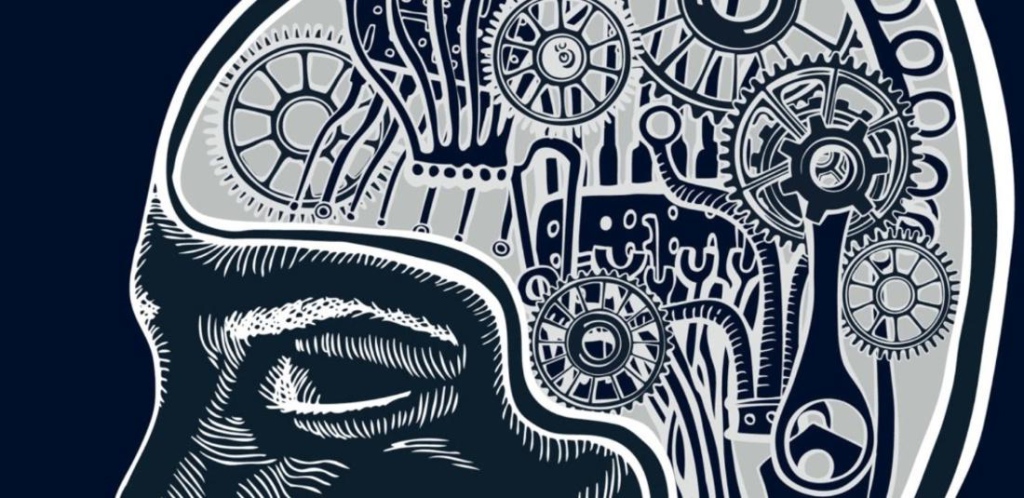
Innate to humans is a capacity to create stories. When this arose is unknown. However, the capacity to take individuals, events, and emotions and like them together as a single thing, a “story” or ” narrative,” has become ubiquitous in human experience. Even when unconscious, our minds will create such stories out of dream experiences. Indeed, the mind “stories” or “narrates” whether we like it or not, all on its own, and then will determine behavior based upon these stories.
Attendant to this capacity to story appears to be a reservoir of potential elements within the mind for creating stories. Beginning in the late 19th Century, a wave of thinkers, from Adolf Sastian and his “Elementary” ideas to Carl Jung and the idea of ” archetype,” to Claude Levi-Strauss and the idea of “mythemes,” and more recently Eugene Dorfman and Henri Wittmann’s idea of “narrates,” a sense that there was a deeply held shared set of core images from which humans draw their stories or narratives has emerged.
In nearly all cases, these elements of stories or narratives have been framed like those of language, with discrete, irreducible units that function like phonemes do. Much like phonemes, there are many potential discrete units at birth. However, in the course of development within a culture, some units are emphasized while others will atrophy. In some ways, a culture can be seen as a “meta-narrative,” emphasizing some story units while marginalizing and eliminating others. For someone to fit in a society, their self-generated narratives must fit, more or less, to the meta-narrative of their culture, or else they risk ostracism.
On an individual basis, we often have our meta-narrative, which informs not only how we see ourselves but also how we see others and the world. Like so much, the construction of this meta-narrative is a product of happenstance and cultural development. For many, their meta-narrative develops as adolescents and early teenagers, where one is engaged in finding and preserving an identity for oneself.
In nearly all cases, individual meta-narratives tend to cast the individual as a hero figure in their own life. It is primarily because of this that humans respond so powerfully to the kind of stories that share features of what mythographer Joseph Campbell called “the monomyth,” whether in myth, art, or personal storytelling. The specifics of each narrative will be different, but the architecture of the tales will often fit this monomythic arc.
One of the most potent ways to reshape how you see yourself, others, and the world can thus be done by working to change the meta-narrative about these things you are drawing from. This can be done by exposing yourself to other cultures where narrative elements are evaluated differently and perhaps more in line with what you envision for yourself. It can be done through immersion into fictional constructs as well.
Within Setian culture, one of the defining features of Order Work is a coherent meta-narrative lens that provides more empowering means of pursuing Xeper, with specific techniques and approaches stemming from the meta-narrative. This highlights how the process of changing your meta-narrative cannot simply be an activity of the rational self. One cannot simply think oneself into a new meta-narrative as one’s thoughts are in part bound by that same meta-narrative. Instead, it requires the engagement of the total Self-complex in the process.
 Setemheb