
It is not uncommon for there to be remarkable outcomes when a Magus makes what seems like a minor comment. In some cases, these comments transform in time into major life-defining events. Take, for example, this short inscription to Michael A. Aquino from Anton Szandor LaVey in his first copy of The Satanic Bible:
“To Michael A. Aquino, who shall become more than can now be stated.”
During the expansion of the Church of Satan, Magus LaVey suggested to Grotto Leaders that they spice up their rituals using texts on anthropology, fiction, or other seemingly non-occult sources. Then-Priest Michael A. Aquino bought a 1966 reprint of Budge’s Egyptian Language. He used the information in the text to make the Workings of the Ninevah Grotto in Louisville, KY, a bit more “spiffy.”
Chapter IX of Budge’s work focuses on Egyptian Verb conjugation. While many of the other chapters use different words to illustrate his points, this chapter is built around the conjugations of one verb root, hpr, which Budge translated as “Become.” The chapter uses several notable occurrences of this verb root to teach the basics of conjugation, including a short section of a spell formula from the Papyrus Bremner Rhind IV. From this spell formula, the sentence “Xepera Xeper Xeperu” was first read by then-Priest of Mendes Aquino.
Egyptian themes would not be predominant in Aquino’s continued Work within the Church of Satan. As seen in his reprinted articles in Church of Satan, his interests were wide and varied. He took a cosmopolitan approach to the various forms that “black magic” took across historical and fictional cultures. He retained an interest in Egypt, however.
In the spring of 1975, he conducted a Working known as “The Sphinx and the Chimaera” (reprinted in Temple of Set). This Working is notable for two reasons. This Working was the first to be conducted using the restored Enochian that would develop into the Word of Set. Secondly, the report of the Working takes the form of a long discussion between two mythic creatures observed by the Magician. Much of the discussion focuses on the works of Plato and, in some small ways, the likely Egyptian origins of much of Plato’s ideas. This passage quoted by the Sphinx is significant to our discussion when talking about Egyptian notions of time, cyclical regeneration, and immortality.
I was the spirit in the Primeval Waters.
He who had no companion when his name Came Into Being.
The most ancient form in which I Came Into Being was as a drowned one.
I was he who Came Into Being as a circle.
He who was the Dweller in his Egg.
I was the one who began everything, the Dweller in the Primeval Waters.
First, the Wind emerged for me, and then I began to move.
I created my limbs in my glory.
I was the maker of myself; I formed myself according to my desire and in accord with my heart. “
The text attributes this quote to R.T. Rundle Clark’s Myth and Symbol in Ancient Egypt page 74. It does not mention that this passage was drawn from a version of the Heliopolis cosmogony. This same cosmogony is the source for the Papyrus Bremner Rhind spell for the “Slaying of Apep” that provides the core of Budge’s Chapter IX.
Sometime in May of 1975, Magister Aquino consulted works on Egyptian art. Nearly all of the images of Set were destroyed, reminding of Budge’s discussion in The Mummy of the destruction of much of the imagery of Set by later cults, most notably that of Osiris. Magister Aquino would, in a moment of playfulness and “Sudden sympathy for this ‘old mythological figure,'” decided to restore an image of Set with his own hand, taking from Budge a line of hieroglyphs from a hymn that translates to English as “Let my Great Nobles Be Brought to Me.” Satisfied with the results, he put the image in his collection, not thinking much more about it.
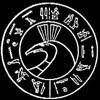
Within a few months of that drawing, the entire Initiatory World he had dwelled within would collapse. As we have seen, he had the seeds for its renewal; he simply did not know it.
 Setemheb