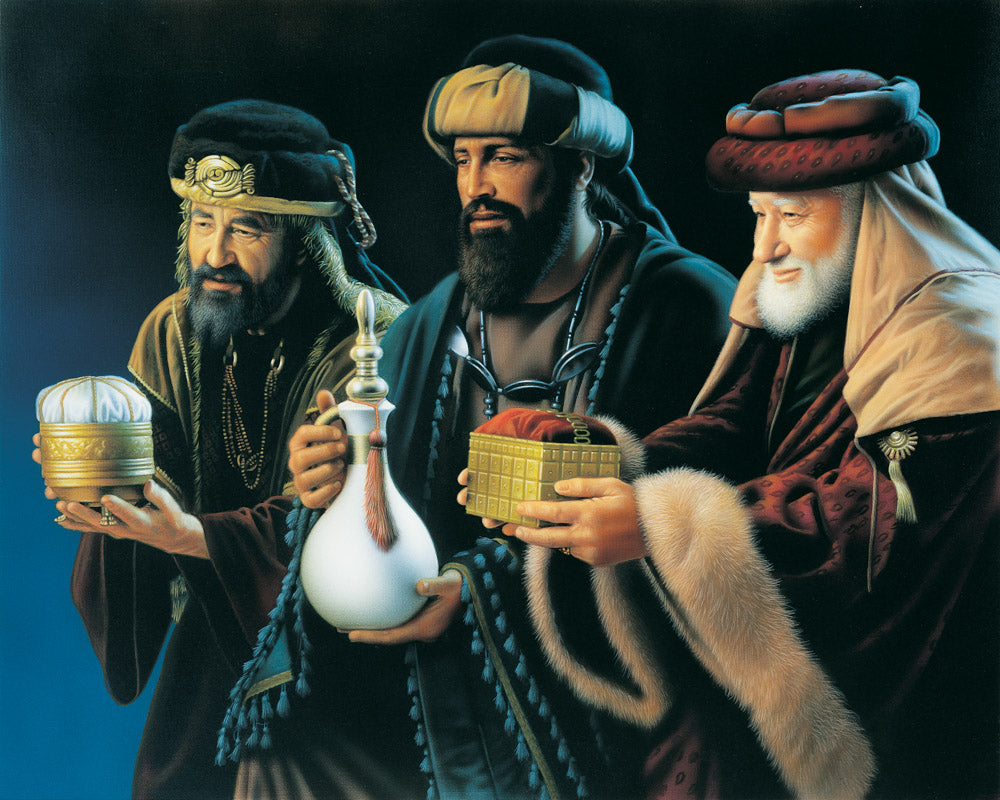
The English word “Magus” comes from a Latinized form of the Greek μάγος magos. The Greeks, in turn, acquired the term from Persian magus. In the 4th Century, the word entered into the Greek vocabulary following their contact with practitioners of Zoroastrianism. The Greeks did not quite understand the Zoroastrian tradition, but what they did derive from their contact was the idea that the Magos served a priestly function within this tradition and were mainly concerned with the stars of the night’s sky as a means for foretelling the future as well as being adept at practical magic. Our word “magic” derives from magos, and the associated terms mageia and magiko displaced the indigenous Greek words for the practice of magic.
For most people, this primary exposure to the idea of a Magus, or more the plural Magi, derives from the account of the birth of Jesus in the Gospel of Matthew. It is worth noting that Matthew was believed to be writing his account of Jesus’ life and ministry to a Jewish Christian community in Syria and emphasized the failure of the Jews to accept the Messiah and instead Christ’s mandate to convert the Gentiles. As such, the appearance of the Magi represented an early moment where the wisdom of the non-Jews concerning Christ was greater than that of his own people.
It was said that attendant to the birth of Christ, that Magi had witnessed an unusual stellar phenomenon, the so-called Star of Bethlehem, and took this as a sign that an important new teacher was to be alive in the world. These Magi set off to visit the newly born future Teacher and brought gifts signifying his importance: Gold for temporal Ruling Power, Frankincense for the Sacred, and Myrrh in preparation for his anointment in death. Although the number of Magi is never mentioned in the text, nor are their names, a tradition of there being three Magi, and expanded stories about their names and origins, entered early into Christian narrative.*
This notion of the Magi having discovered “one of their own” in their recognition of the Christ, combined with the Philo influenced doctrines related to Logos found in the Gospel of John, helped to suture together an association between the Magus and the Logos, and situated Christ within the frame, at least for some. More importantly, though, the name of Magus would enter into Christendom via the previously mentioned tale of Simon Magus and his status as a pretender to being the Messiah.
*Few people realize how much religious narrative has in common with Fan Fiction.
 Setemheb