Little about the life of Zarathustra is known for sure. While tradition places his birth to some time in the 6th Century BCE, there are credible arguments for his being alive as far back as the 18th Century BCE. Two texts are attributed to him directly, the Yasna Haptanghaiti and the Gathas, which take the form of Hymns and form the core of Zoroastrian religious practice. These texts are written in Old Avestan, an Indo-Iranian language closely related to the Sanskrit of the Vedas.
What is known is that Zarathustra was part of a branch of the Indo-Iranian peoples living in what is today Iran. At this point in Indo-Iranian history, these people have acquired knowledge from their contacts with Mesopotamia, which had led from a life of simple pastoralism towards a life of cattle raising and rustling, at least for some. A split between the population was explained in part by mythic characteristics. Those who retained the earlier pastoral traditions were associated with the forces of Order, the Ashavan. In contrast, those who had taken up Cattle Rustling as their primary life way were associated with the forces of Chaos, the Drujvan.
Like the religions of nearly all peoples at this time, the religion of the Indo-Iranians focused primarily on the notion of Cosmic Maintenance. Priests existed to act as intermediaries in this process, ensuring that all continued to go well. The sun would remain in the sky, the day would proceed as expected, and the rhythms of life would be predictable. It was to the tribe known as the Medes that Zarathustra was born. It is thought that Zarathustra was a member of his people’s Priesthood, having been initiated as was common around the age of 15. The name that his people used for their Priests was “magauno” in Avestan, and it is the ultimate root word for Magus
Zarathustra, however, would not remain simply a Priest. At a point in his life, he realized that there was only a single uncreated divine force, the embodiment of Asha or “Truth,” and that this Truth was Consciousness. Because the ultimate Mystery of this Consciousness was incomprehensible initially, it was reflected through seven other divine figures, perhaps seen as personifications of the Seven planets.
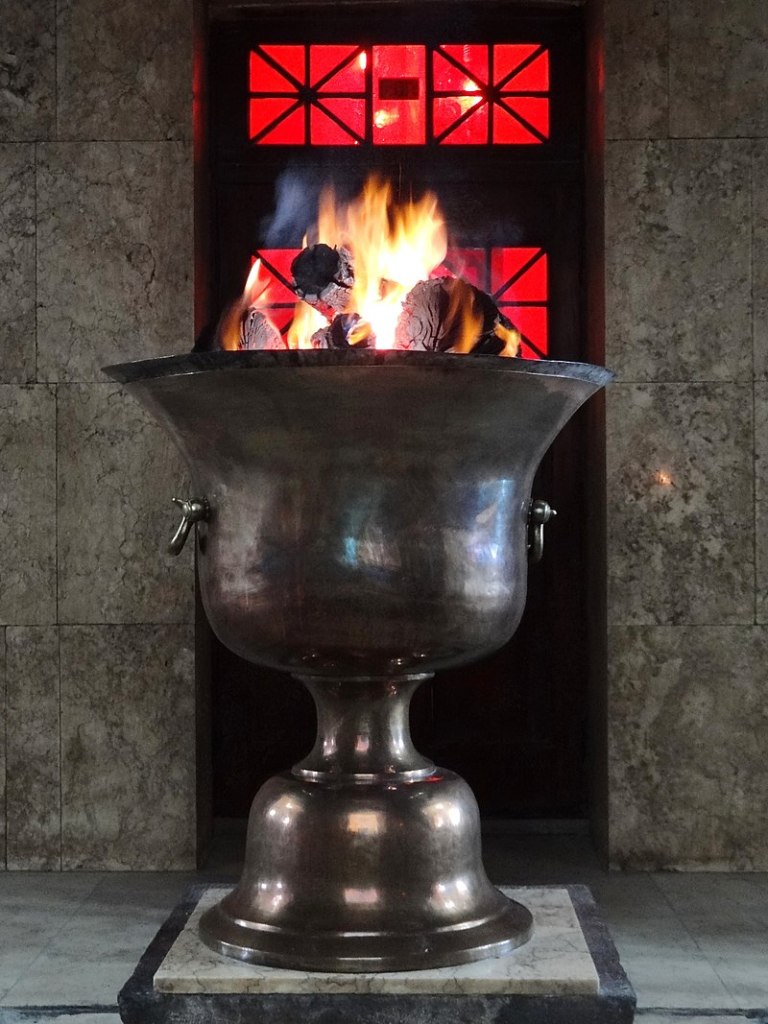
Zarathustra would use this realization as a force of reformation within his tradition under his apprehension of Asha, retaining aspects such as tending a sacred fire as a symbol for the Fire of Consciousness. More importantly, he introduced a new purpose for the practice of religion itself. Rather than focusing upon Cosmic Maintenance as all before he had, Zarathustra made the central feature of his reformation the individual transformation by the light of Asha, leading to personal salvation done by the deeds performed in life.
This shift of focus in religions from Cosmic Maintenance to Personal Salvation would become, in time, the center of gravity of all of the World’s major religions. Zarathustra’s realization was the prefiguring of these shifts, either within existing traditions or as heretical reformations that broke away from tradition. Based upon the work of Karl Jaspers, the period of this significant shift is known as the Axial Age and ran from roughly 800 BCE to 200 BCE. The Axial Age occurs throughout the Old World, with the major centers being Persia, India, and China in the East and the Mediterranean in the West. Interestingly the influence, whether direct or indirect, of Zarathustra can be traced through this same geographic distribution, suggesting that these significant Axial transitions were a reaction to the light of his original realization.
Zarathustra, with his apprehension of Asha, would become the first man known to the world as Magus.
 Setemheb
One thought on “Zarathustra, the First Magus”